

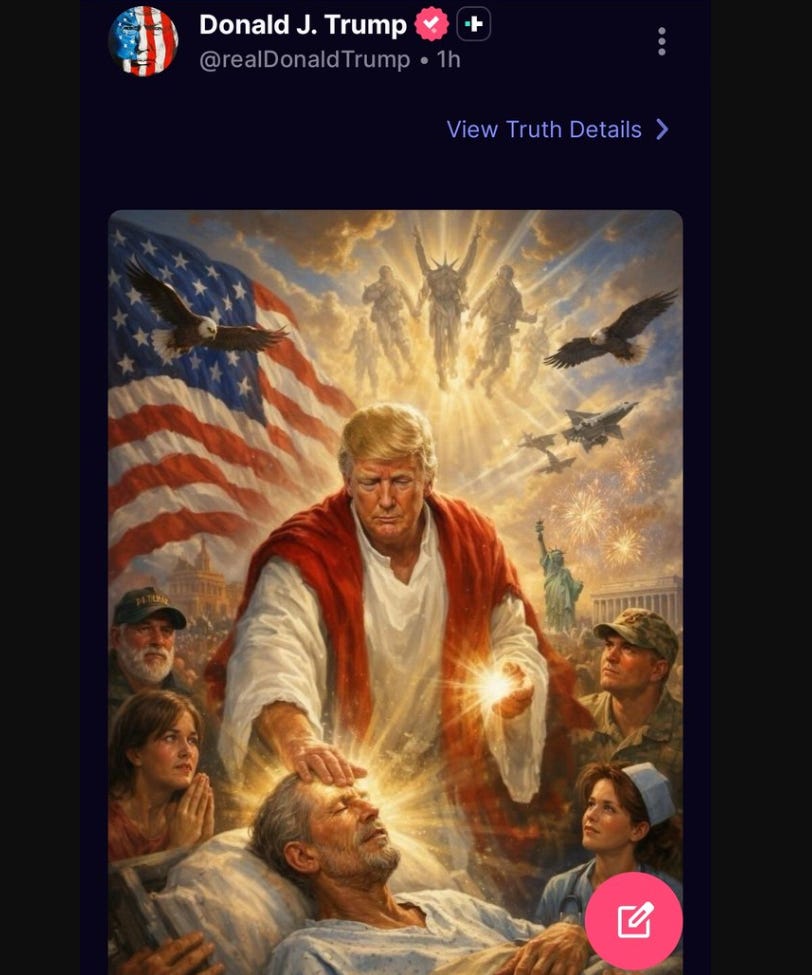
A bizarre image the president of the United States posted on social media overnight portrays him as a godlike healer reviving a man who looks like Jeffery Epstein. If you understand how image generation models work, the composition of this ‘AI slop’ makes perfect sense.
AI slop is the term for low-effort, mass-produced, and low-quality content generated by artificial intelligence. While the term started as internet slang, it was the 2025 “Word of the Year” by the Macquarie Dictionary because everyone in the world is experiencing the digital pollution from AI slop flooding social media feeds and Google search results.
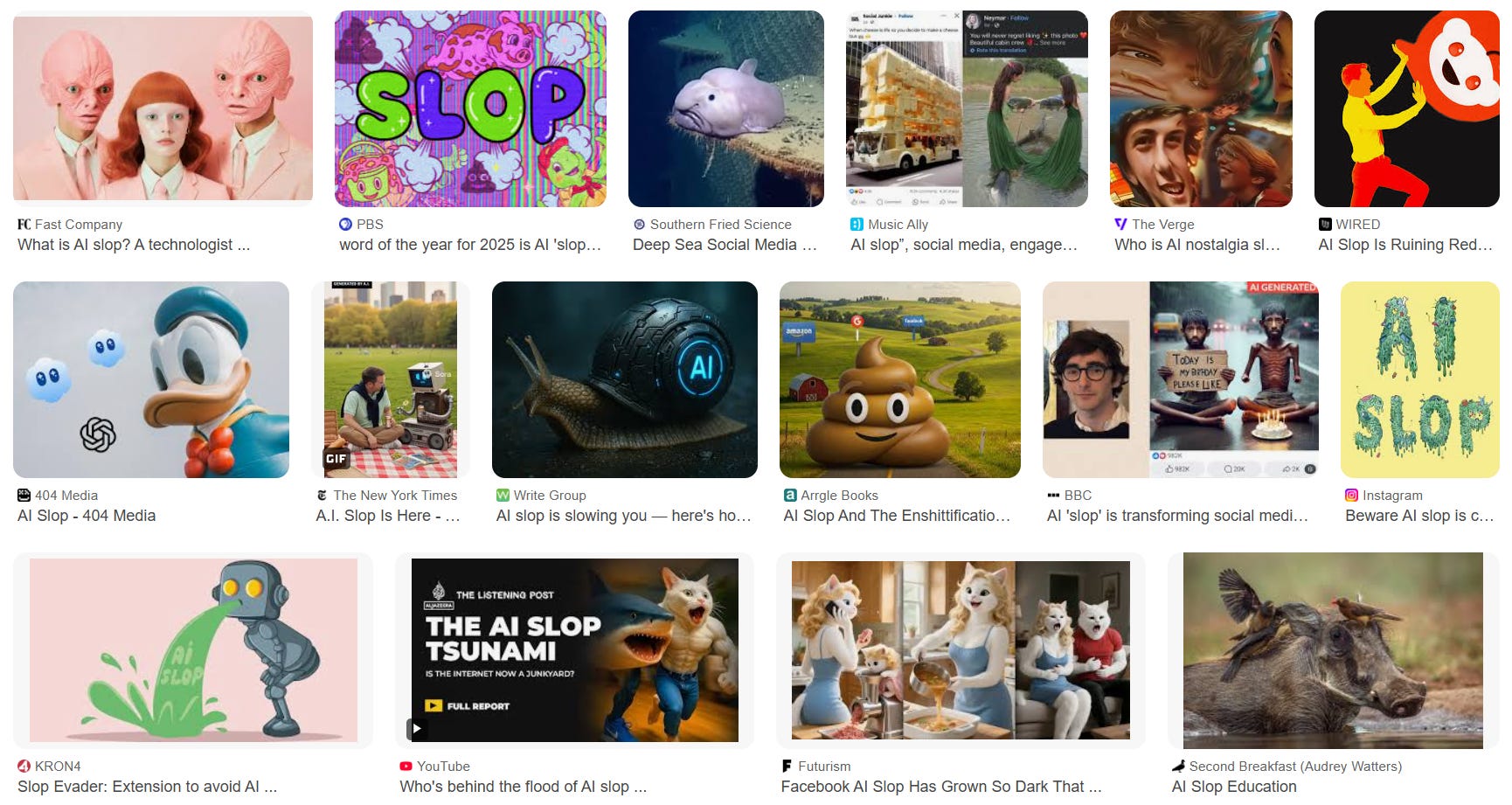
To understand the proliferation of AI slop and how the US president feeds into it, I’ll start by explaining how AI image generation works.

An AI model generates an image by removing “noise” from a random starting point by using learned statistical patterns to predict which pixel arrangements most likely represent the concepts in your prompt. The model constructs people by blending mathematical averages of facial features in training data. The model then generates statistically dominant representations of the items described in the prompt.
The image the president posted was likely generated with a prompt like: “Oil painting of Donald Trump as a religious leader performing a divine healing surrounded by patriotic imagery”.
How did that prompt transform into a picture of Trump bringing Jeffery Epstein back to life?
Factor 1. Generic Bias
AI models rely on a “latent space” from billions of training images. Imagine latent space as a massive, multi-dimensional map where every concept the AI has ever learned is assigned a specific coordinate. Instead of storing actual photos, the AI stores the “essence” of things. On this map, there is a region for “faces” with neighborhoods (manifold learning) for “gray hair”, “sick man”, and “closed eyes”.
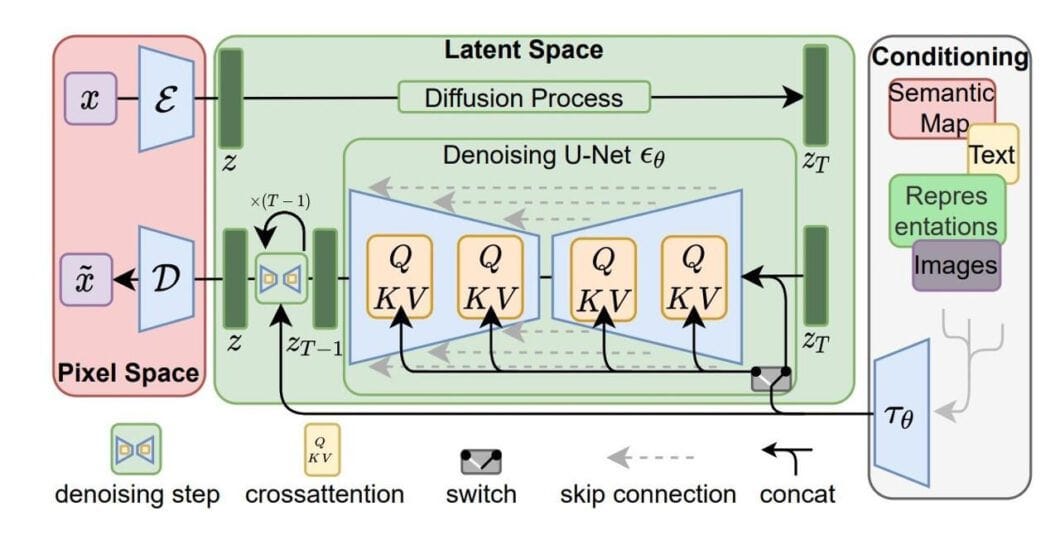
When the AI generates an image, it isn’t copying/pasting like a Google search. The AI model is picking a point on that map and translating the mathematical coordinates back into pixels. If a prompt asks for ‘divine healing’, AI generates a composite that averages possible features (e.g., robes, warm glow, old hospital patient). Because Jeffrey Epstein’s face is extremely prevalent in news and media datasets, his features often “leak” into generic depictions of an older man.
Factor 2. High-Profile Associations
AI isn’t making a conscious political statement when it generates image. Because millions of photos, posts, and articles exist of Trump and Epstein together in news and social media archives, the AI’s neural network will have a statistical “link” between the two figures.

When asked to generate Trump with another person, AI uses facial structures from the most likely associated people (overfitting bias toward high-frequency samples). Just like running statistical tests for a research paper, overfitting the data creates all kinds of problems with the interpretability of the results.
Factor 3. The “MedBed” Conspiracy
This specific image is part of a 2025 social media trend involving “MedBed” conspiracy theories that have miraculous healing technology. In these online circles, there are recurring (unfounded) theories that Epstein is still alive because the US government has secret hospitals full of high tech beds that can treat any illness.
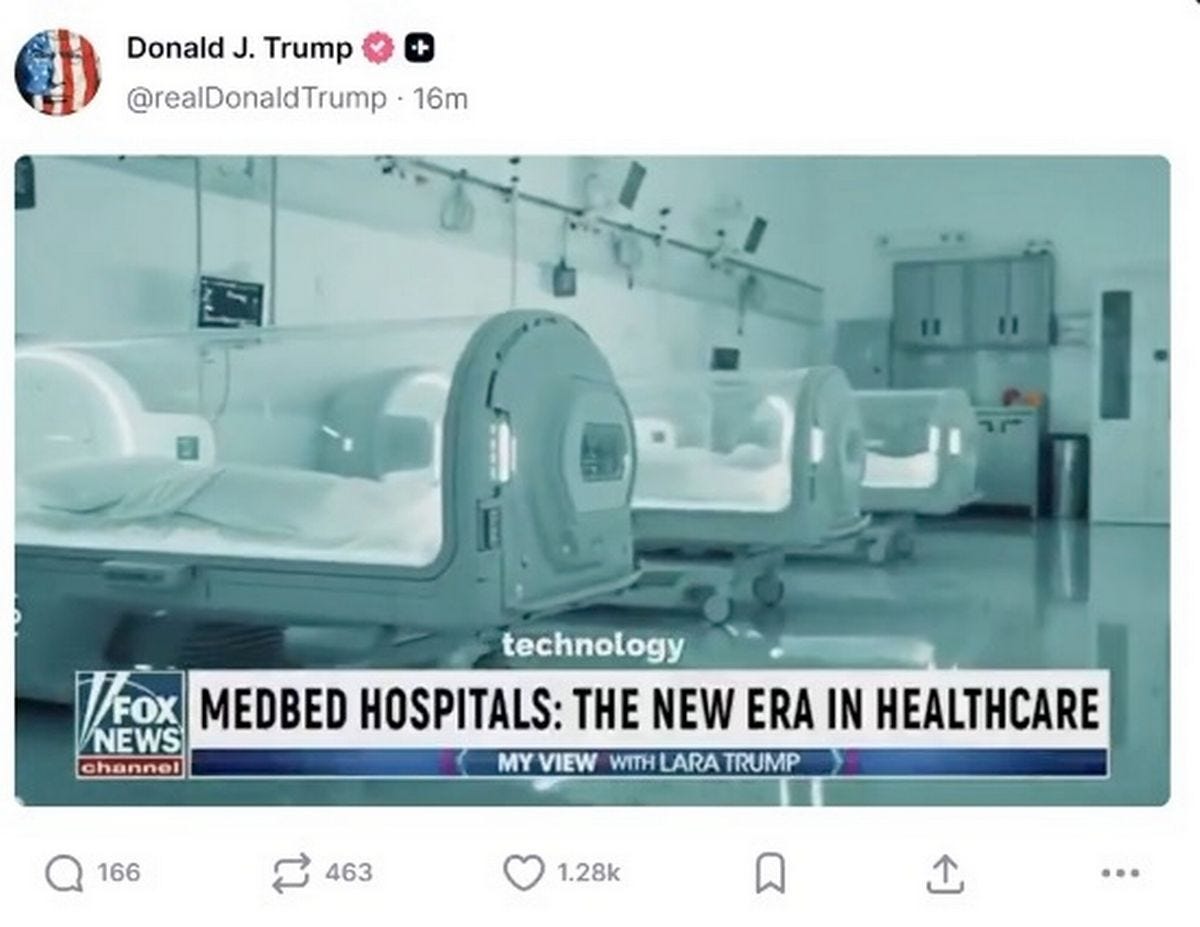
When AI models are trained on the entire internet including Reddit forums, twitter comments, and random blogs, an image generation model prompt will associate “Trump→Epstein or Healed→Medbed” as closely aligned terms that belong together in the same “neighborhood”.
Outcome
AI accidentally created a “visual hallucination” that carries immense political weight even when showing Trump healing Epstein is most likely a statistical accident. The AI model was trying to create a frail old man for a religious figure to heal, but because the training data has so many photos and articles about Epstein and Trump, it defaulted to those familiar facial ratios that share the same “neighborhoods” of theme association.
From a first-principles perspective, the AI did exactly what it was designed to do because the image generation model found the most likely path between two points. If we continue to saturate our digital environment with low-effort, high-frequency slop, the math will eventually default to the most prevalent (and likely controversial) associations. When we feed an AI algorithm a diet of extreme data, the “average” result it calculates will naturally shifts toward that extreme. This process effectively turns the law of large numbers into a race to the bottom of the cultural barrel.
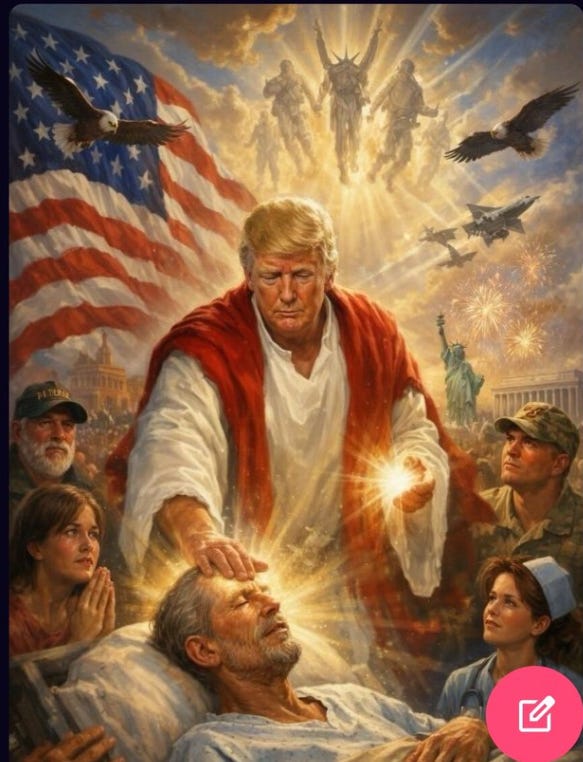
Ultimately, this image is a perfect artifact of the 2026 information landscape. The president shared a messianic delusion built on a foundation of statistical noise. Trump didn’t choose to revive Epstein, the AI algorithm simply couldn’t find a version of Trump’s fantasy world where Epstein didn’t already exist.
David Riedman, PhD is the creator of the K-12 School Shooting Database, Chief Data Officer at a global risk management firm, and a tenure-track professor. Listen to my podcast—Riedman Report: Risk, AI, Education & Security—or my recent interviews on Freakonomics Radio and the New England Journal of Medicine.