
Battlefield drones in schools?
FPV drones have completely changed the landscape of the war in Ukraine as offensive tools for targeting enemies. But can they be safely used for defense in close-quarters combat?

FPV drones in the Russia and Ukraine War are causing ~70-80% of all battlefield casualties. It's cheap and easy to attach explosives to a $1000 consumer model and detonate it right as the drone reaches a target.
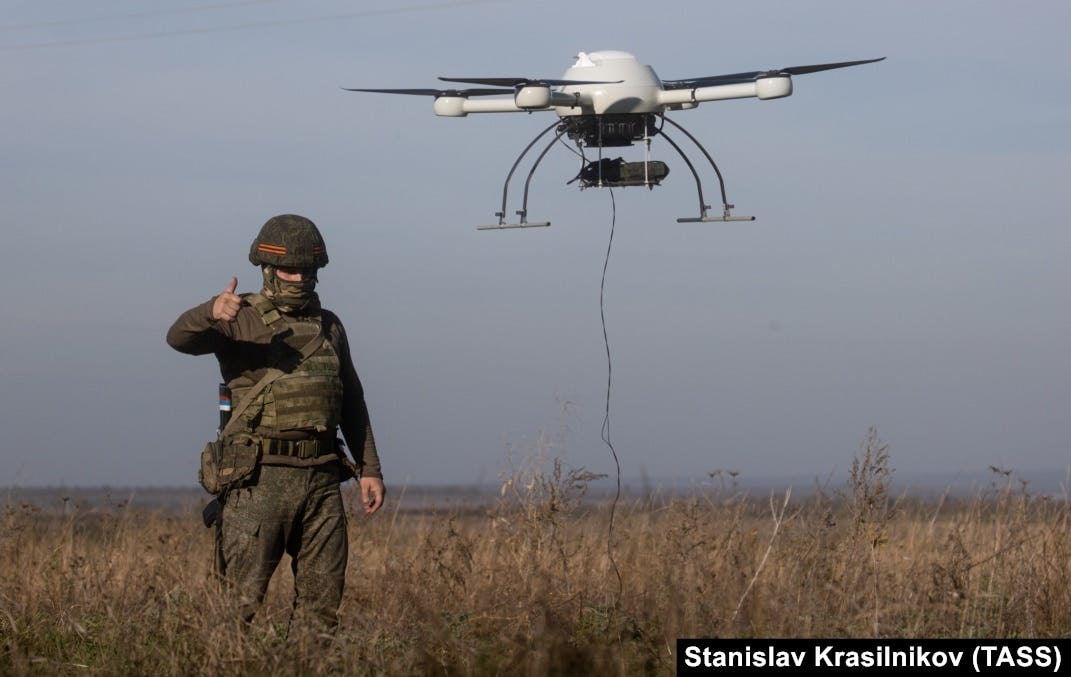
I predicted last year that there will be a drone attack at a US school in the near future because this tech is so widely accessible and most school shooters already build and plan to use IEDs (Ten school shooting threats we are failing to imagine).
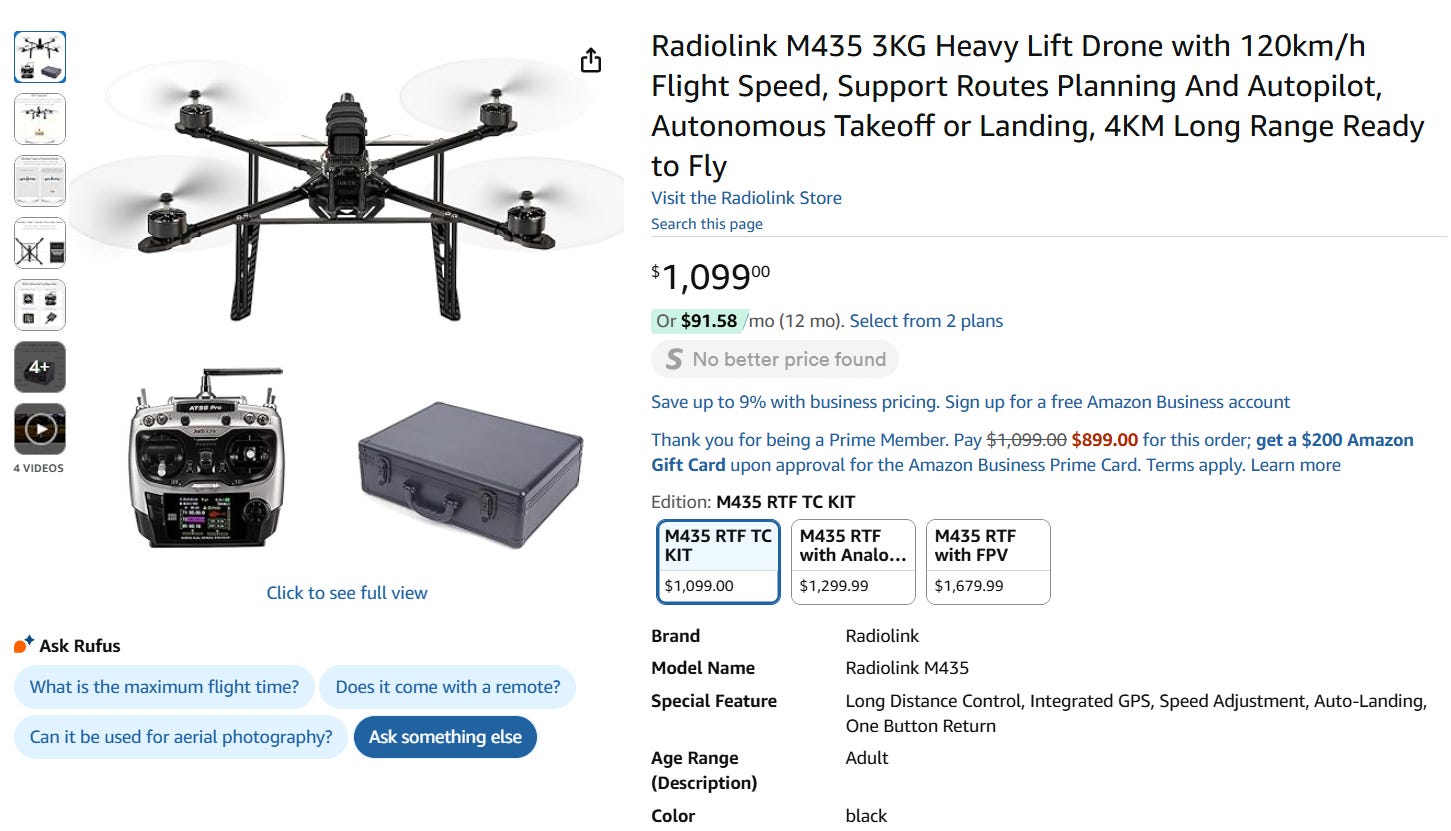
Right now on Amazon, anyone can buy a $1000 drone that can fly at 75 mph and carry 6.5 pounds of cargo. I went to an explosives training course at New Mexico Tech and it’s amazing how much damage a 5-pound pipe bomb can do. A drone with a 6.5-pound pipe bomb inside a school hallway or classroom would be a very bad situation.
War in Ukraine
In Ukraine, thousands of reconnaissance and combat drones have become a cornerstone of modern warfare with an estimated 70-80% of battlefield casualties being caused by drones. These drones are used for a wide range of missions including surveillance, precision strikes, medical supply delivery, and kamikaze-style attacks where the drone explodes with the bomb it carries.
Ukraine uses a variety of drones from long-range strike to submarine drones capable of sinking Russian ships. Some drones are adapted from civilian agricultural models, while others carry small explosives to detonate near a group of Russian soldiers or vehicles.
These drones are primarily an offensive weapon for striking targets 10-20 km away. They can also be used for defensive operations like surveillance and rapid counterstrikes against tanks and artillery. In close quarters combat, drones are being used to look inside of buildings before soldiers enter and as “suicide drones” that will explode if they see an enemy inside.
When Ukrainian civilians are in a city being attacked by Russian forces, Ukraine only uses drones for surveillance because the risk of a drone with explosives accidentally detonating near the wrong target is too high. Ukrainian authorities also warn civilians to evacuate from zones where combat and suicide bomb drones are going to be used.
Tiny helicopters with lots of power
Even without explosives and weapons, how much damage can a $500-1000 consumer drone really do? A 1-kg drone flying at 60 mph has approximately 360 joules of kinetic energy when it hits a person.
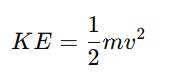
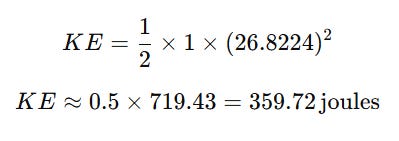
For comparison, that’s the same amount of energy as a Major League Baseball pitcher throwing a fastball at 100 mph (enough impact to knock all the feathers off a bird).

If a child is walking in a hallway and a drone hits them at 60pmh, the drone has enough force to fracture a child’s skull, cause an intracranial hemorrhage, or a traumatic brain injury (TBI) like a concussion.
Drones for defense?
While drones are a very effective offensive weapon on an outdoor battlefield, it's unclear if they can safely be used as a defensive tool inside a building. Just this week, local news stations all over the country have run stories about a company that is deploying drones to “prevent school shootings”.
The company in this video is charging $51,000/year to put attack drones inside a 1,000-student school (note: pricing is a flat fee for equipment plus monthly charge per student. It’s not clear why attack drone prices are based on the number of kids in the building).
Here are a few questions I have about using drones to "prevent" school shootings:
Most planned attacks begin and end inside the same classroom. How does a drone open the classroom door to get inside? If a school has an integrated lockdown system, hallway fire doors also close automatically (this often traps students in wheelchairs) because NFPA/IBC code requires corridor and stairwell compartmentalization in large buildings. Building codes prevent a drone from flying freely through a large building.
The most common situation for a shooting on campus is shots fired during a fight and the shooter flees within seconds. Does having dozens of drones flying through the school hallways increase or decrease risk when this happens?
When shots are fired, many students evacuate regardless of school lockdown procedures. A 1kg drone traveling at 60mph has the same kinetic energy as a MLB pitcher throwing a 100mph fastball. Is it an acceptable risk for a drone to hit a bystander student in the hallway?
How does a human piloting a drone flying 60mph tell the difference between a school shooter, armed teacher, school security guard with a gun, and plainclothes police officer responding to the shooting?
If an attack drone injures or kills a student, does the company pay the damages or is the liability on the school system? Wrongful death settlements involving students killed at schools are typically in the $5-20M range.
Common item in After Action Reports is schools either have cellphone deadspots or spotty wifi coverage so staff didn't get alerts during an emergency. For smooth video, a standard DJI FPV drone needs 50 Mbps. Flying 50 drones simultaneously requires about 2.5X the bandwidth of high-end commercial internet service plans. Do these drones need their own dedicated high-bandwidth wifi networks? If so, who pays for that? Who presses the little button on the side of the drone each week to make sure it's still synced to the right network?
Real Threat vs. Questionable Defense?
The war in Ukraine has shown the world that drones are no longer futuristic military tech. They are cheap, deadly, and widely accessible weapons of war. That same consumer-grade technology is now available in the U.S., just a click away from any teenager with $1,000 and violent intent.
While tech companies race to sell “drone defense” systems to schools, the hard truth is that drones aren’t really defensive tools. They are uniquely suited for lethal offense and causing indiscriminate damage, especially in confined indoor spaces like school hallways and classrooms.
Before schools spend +$100,000/year per school building on security drones, we need to grapple with the ethical, logistical, and liability risks of flying semi-autonomous, high-speed machines near children. If we ignore how drone warfare is reshaping the battlefield, we may be blindsided when a warzone’s collateral damage happens in a school hallway.
David Riedman is the creator of the K-12 School Shooting Database, Chief Data Officer at a global risk management firm, and a tenure-track professor. Listen to my weekly podcast—Back to School Shootings—or my recent interviews on Freakonomics Radio, New England Journal of Medicine, and my article on CNN about AI and school security.
Thank you, so appreciate your clear eyed analysis. Especially your point that these drones are designed for offense, not defense. Seems to me they would hurt more students than they would protect.
Where did this idea for school defensive drones come from, The Onion? How about circling schools with tanks? Have we all gone totally mad?