
Difference between political violence, mass shootings, and terrorism
Motivations and goals of a school shooter, an individual political assassin, and an ideologically motivated terrorist group are completely different.

When a shooting gets major attention from the media and general public, someone always reaches for the same label: terrorist. The term has become a shortcut for any act of violence that feels big and senseless. But it’s not that simple because terrorism is a word that actually has a meaning in domestic and international law.
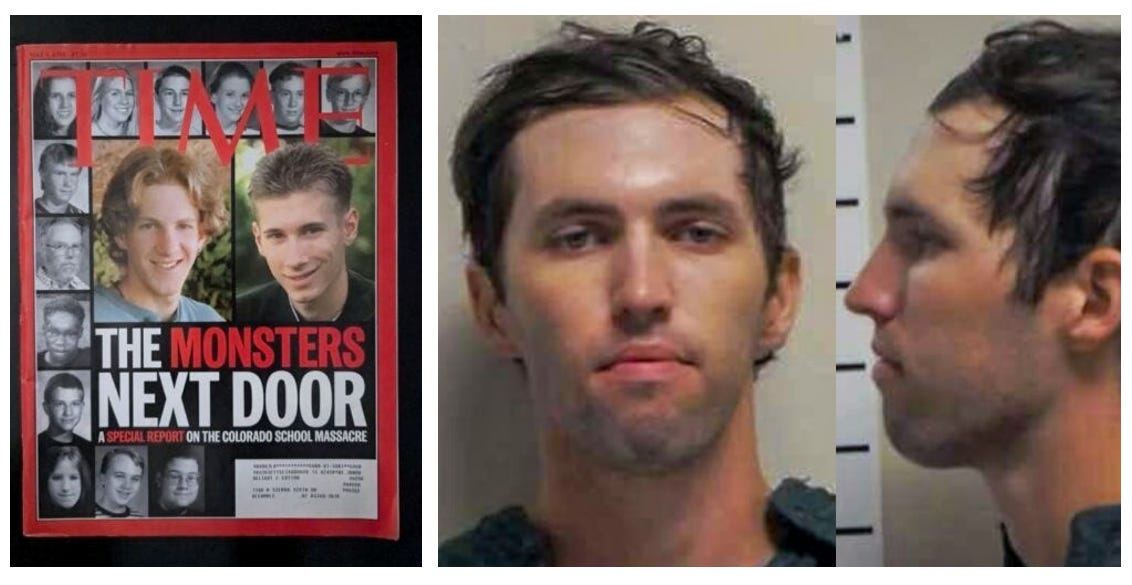
Lumping all violence into terrorism doesn’t work because a school shooter isn’t a jihadist who believes their death is a duty to a fundamentalist view of Islam. A political assassin doesn’t think like a mass shooter in a nightclub. The person who bombs an abortion clinic is acting for a different purpose than a teenager who shoots up his former high school.
Some of these attackers are suicidal and plan to die (and dying as a jihadist suicide bomber is different from being depressed to the point of wanting suicide by cop). Other attackers want to escape and keep living because they think a public act of violence will help change society in the direction they desire.
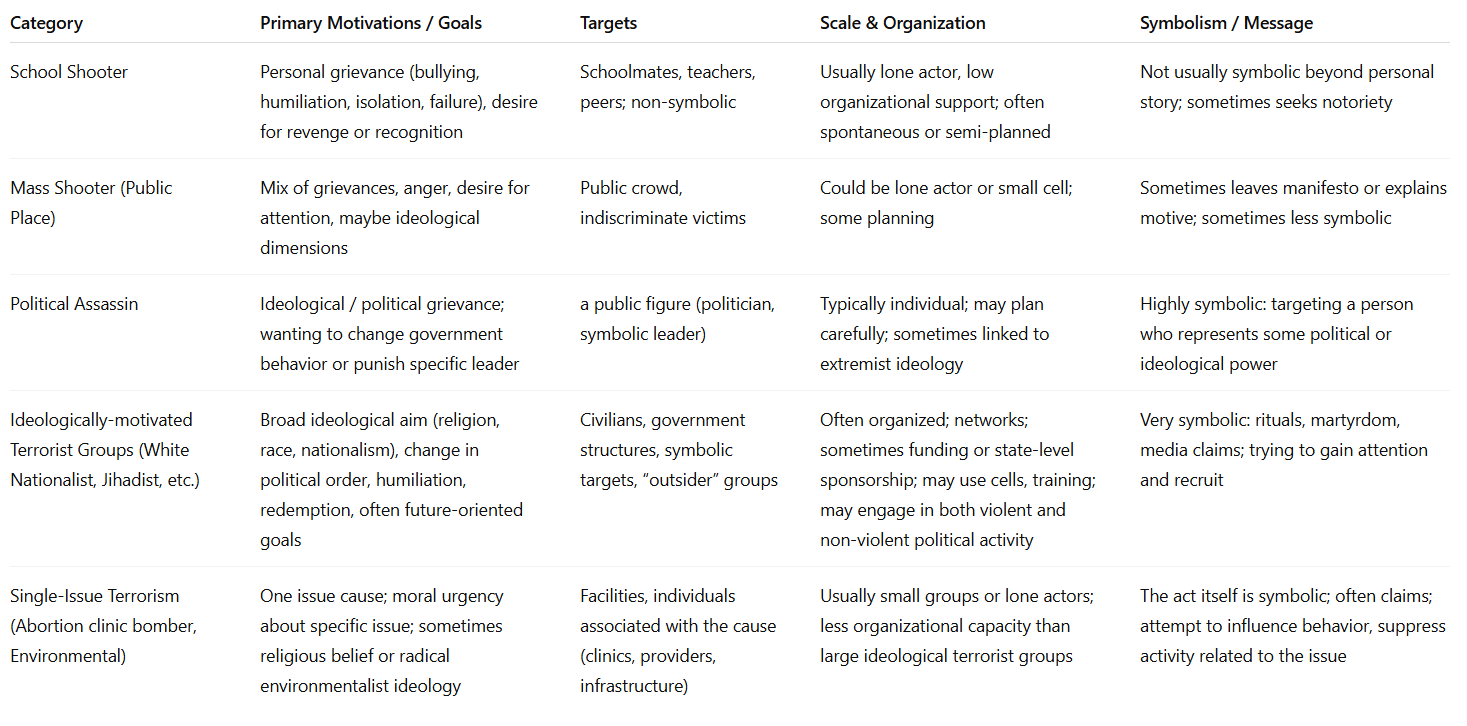
The differences between these attacks are very important to stop them because understanding the motive, target, and their intended message all matters. If we want to stop these attacks, we have to understand what drives them. Here's a breakdown of the five core types of intentional, public gun violence:
School shooter
Mass shooter
Political assassin
Ideologically motivated terrorist
Single-issue terrorist
School Shooter
A school shooter is not a terrorist in the traditional sense. They don’t issue demands, threaten governments, or act on behalf of a movement. Their motive is personal because almost every school shooter is a member of the school community.
They usually have grievances rooted in social rejection, bullying, academic failure, or humiliation, and then the school becomes the symbol of everything that went wrong. This means that the school is not a random target, the school is their only target. The school shooting isn’t a political act because the goal is to make others feel the pain they’ve lived with. This is why school shootings are best described as “violent public suicides” because dying is the most important part of their plan and with that violent death, they want to be remembered and finally seen.
When they leave manifestos or videos, they often mimic other school shooters, not ideological terrorists. Their goal isn’t to win hearts and minds, it’s to punish the people who ignored, mocked, or discarded them. This makes their violence performative, symbolic, and deeply personal.
Case: Annunciation Catholic School & Church, Minneapolis (2025)
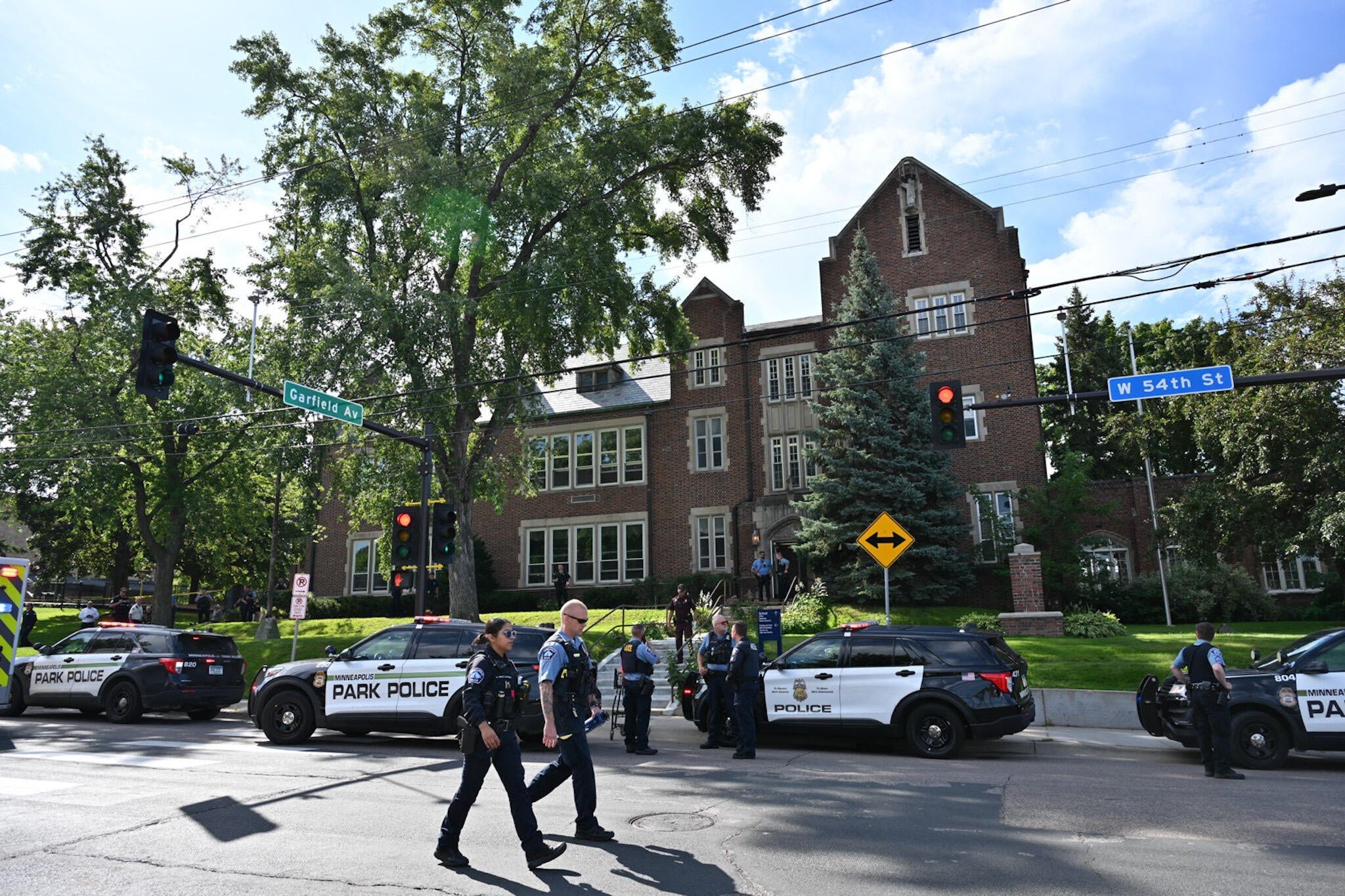
Robin Westman, 23, opened fire through the stained-glass windows of the Annunciation Catholic Church during morning mass. Two children, ages 8 and 10, were killed. At least 17 others were wounded. The attack took place during a religious service, but the target was not about theology—it was about visibility and symbolism. Westman had attended the school as a child and her writings referenced past mass shooters and fixated on specific forms of violence. There was no political demand, no larger goal, and no clear purpose in a manifesto that directed hate in every possible direction.
See more: What were the motives of the Minneapolis school shooter?
Mass Shooter (Public Place)
Mass shooters in public spaces are just like school shooter except they are usually committed by young adults in public spaces rather than schools. They are usually white men between 18-25 who are angry, feel invisible, and want to punish the world. Other mass shootings are just a pure spectacle of killing for killing’s sake without a clear motive. Some attacks have hints of ideology (e.g., racism, misogyny, anti-government) but they don’t have a clear political goal, purpose, or outcome for the attack.
The biggest difference is that while school shooters often target people they know, public mass shooters usually target strangers. While their attack planning may be meticulous, their message is often absent or incoherent. Many are suicidal, some are delusional, and others are chasing infamy by mimicking prior mass shooters. But when they lack a structured belief system, these shooters are best understood not by their politics, but by their public performance of mass violence.
Case: Las Vegas Strip Mass Shooting (2017)
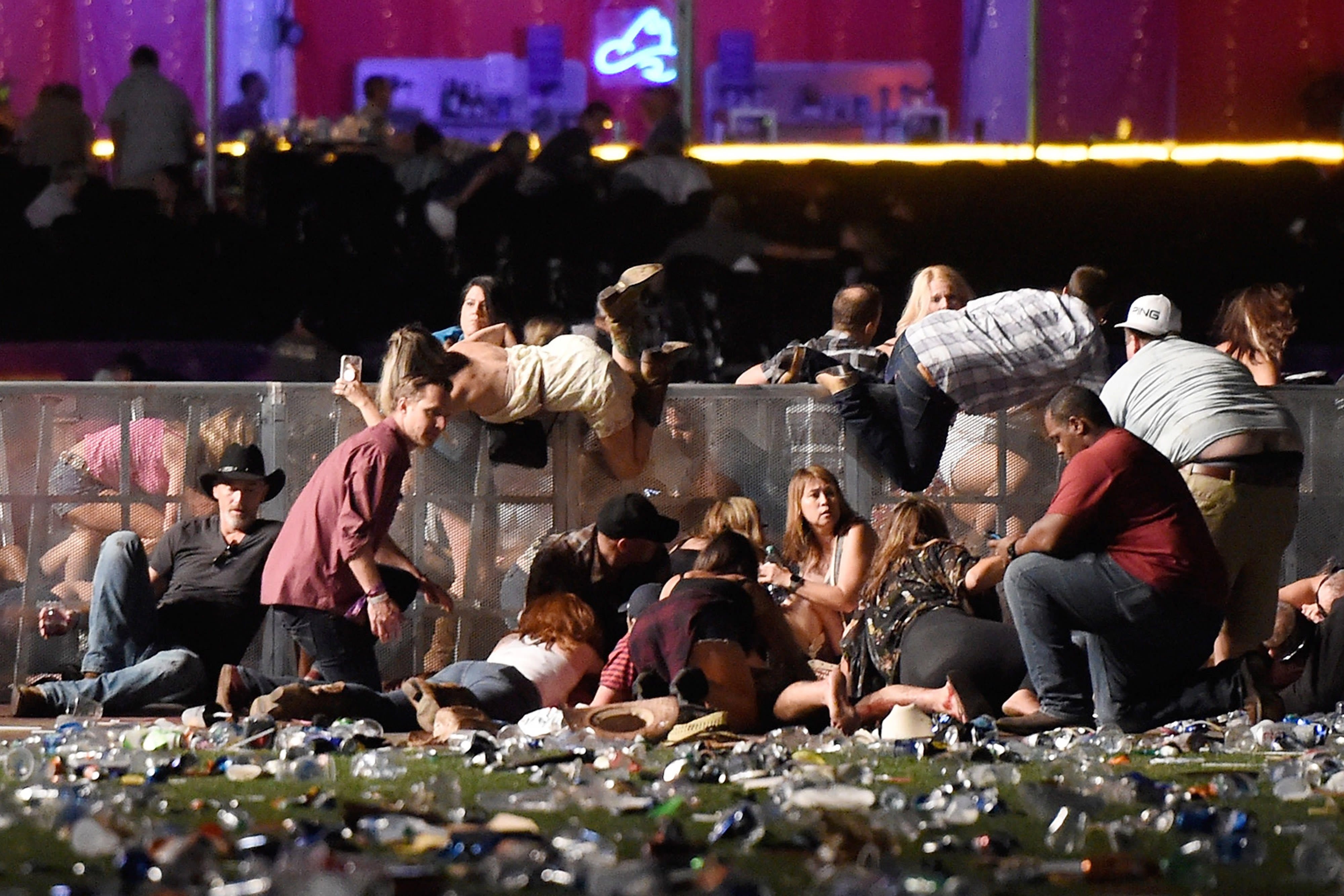
Stephen Paddock fired over 1,000 rounds from the 32nd floor of the Mandalay Bay Hotel into a crowd attending a country music festival. He killed 60 people and injured over 400 more. He left behind no manifesto, no statement, and no confession. Years after the attack, the FBI found no ideological motive, no criminal record, no history of extremist beliefs, and no known mental illness. Paddock wasn’t trying to terrorize a group or change a law. He was trying to kill strangers for reasons we still don’t understand.
Political Assassin
Unlike a mass shooter at a shopping mall, political assassins don’t kill randomly, they kill a specific person. For a political assassin, they don’t need a manifesto or high body count to get attention because killing their target is the message. These attacks can be directed at a head of state, a judge, a political rival, or a symbolic figure because the goal is to kill someone who represents power or a specific message.
While political assassins often work alone, their motives are rarely personal vengeance because a bigger ideology drives their attacks. A political assassin sees themselves as a revolutionary, a patriot, or even a savior correcting the course of history. The assassination is a symbolic act for all of society to see because the intent is to destabilize, provoke, or inspire (or all three).
Unlike a mass shooter or school shooter who plans to die (no escape plan or second act), a political assassin usually flees from the scene. This is because the goal of a political assassination is to change the world and they want to be there for the change.
Case: Shinzo Abe Assassination (Japan, 2022)
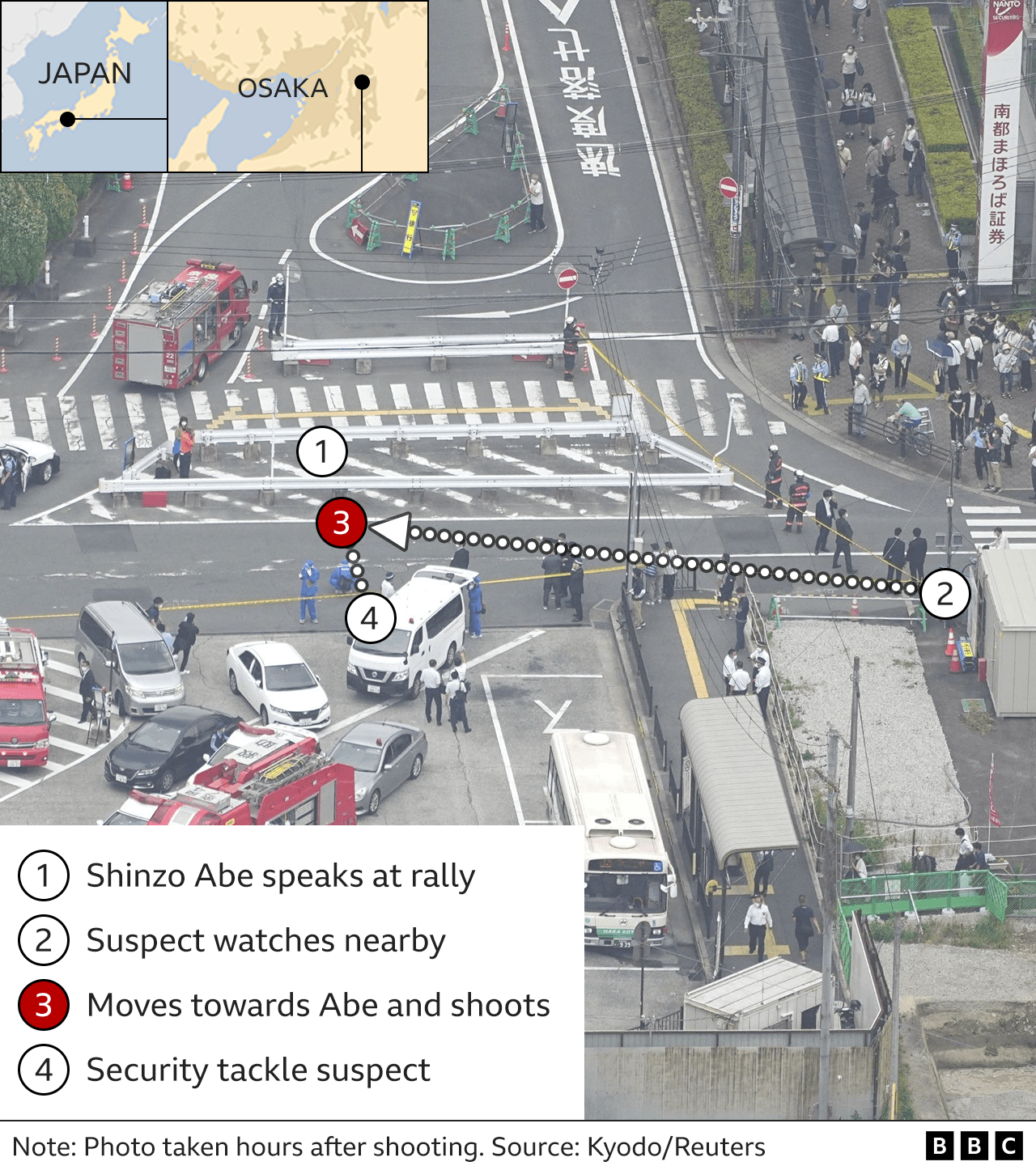
During a campaign speech in Japan, former Prime Minister Shinzo Abe was shot twice by Tetsuya Yamagami and died hours later. Yamagami wasn’t a jihadist or nationalist militant. He blamed the Unification Church where his mother had donated vast amounts of money for bankrupting his family. He believed that Abe supported the group and blamed him for his financial problems. The case shows how political assassins can emerge from deeply personal grievances when they become fixated on a public figure.
Ideologically Motivated Terrorist
The ideologically motivated terrorist is different from mass shootings because they aren’t looking for personal revenge or individual fame, they’re advancing a cause. This can be religious (jihadist terrorism), racial (white nationalism), or nationalist (IRA). For terrorists, the targets aren’t personal, they are symbolic places like government buildings, military bases, and financial institutions. The violence is designed to send a message to a much larger audience and advance the terrorists group’s ideological agenda.
Terrorists can either be formally trained members of a group or self-radicalized individuals inspired by ideology but operationally independent. What unites them is a shared and clearly articulated motive and goals because they believe violence will accelerate their cause. For terrorists, the death toll may or may not matter (IRA would call the police before bombs went off so an area could be evacuated). It’s the narrative surrounding the reason for the attack that matters most.
Unlike assassins who usually don’t want to get caught, terrorists often write manifestos, demand letters, post online videos about the attack, or even claim credit for violence they didn’t commit. This is because their attacks are not just tactical military strikes, they’re theatrical. Whether bombing a subway or shooting up a mosque, the goal of a terrorist is not just to kill, but to be heard.
Case: West Side Highway Truck Attack (New York City, 2017)
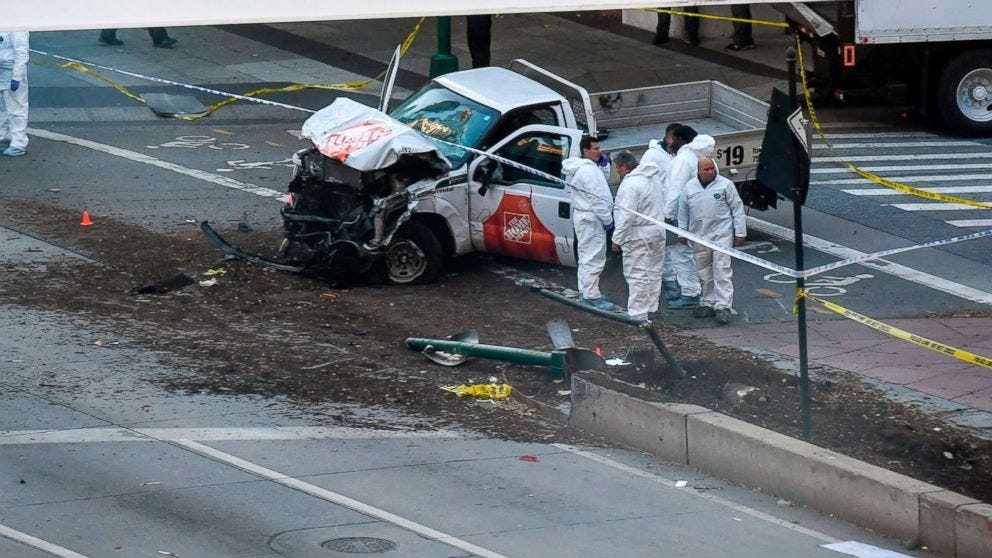
On Halloween afternoon, Sayfullo Saipov drove a rented Home Depot pickup truck down a bike path in Lower Manhattan, killing eight people and injuring a dozen more. When he crashed the vehicle, he jumped out holding fake firearms and shouted “Allahu Akbar.” Police shot and arrested him on the scene. Inside the truck, investigators found notes pledging allegiance to ISIS. Saipov told authorities he was inspired by ISIS propaganda videos, and that he had planned the attack for over a year, renting the truck in advance to rehearse. The violence was meant to signal loyalty to the Islamic State and inspire others to act. Like many lone-wolf jihadists, Saipov wasn’t trained in a foreign camp. He was radicalized online, consumed propaganda, and executed a low-tech, high-profile attack that fit into a larger ideological narrative.
Single-Issue Terrorist
Single-issue terrorism is focused on narrow issues like abortion, animal rights, or environmental damage. An abortion clinic bomber sees murder as moral because it’s protecting unborn children. An environmental saboteur who sets construction equipment on fire sees arson as activism that’s in the service of protecting the forest.
These single-issue terrorists believe that the system has failed so catastrophically that only violence can correct it. Unlike broader ideological terrorists, they don’t want to overthrow governments or reshape all of society because they want to stop one thing. The intent of their attacks is to instill fear, shut down operations, and deter participation in the one issue they care about. And though they often operate alone, they see themselves good actors who as part of a moral movement.
Case: Dr. George Tiller Assassination (Kansas, 2009)
Dr. George Tiller was one of the few physicians in the U.S. providing late-term abortions. He had survived a prior shooting and wore body armor to work. On May 31, 2009, Scott Roeder shot him in the head. Roeder saw himself as executing justice and he had previously defaced clinics and made threats. His goal wasn’t just to kill Tiller, it was to send a message to every abortion provider in America that they should live in fear. This single-issue terrorist attack wasn’t about attention or fame for the perpetrator, it was about ending a practice through murder and fear.
Differences Matter
We use the word “terrorist” too casually in this country. Not every mass killer is a terrorist. Not every political killer is part of a movement. Some attackers are motivated by hate while others have a twisted idea of righteousness.
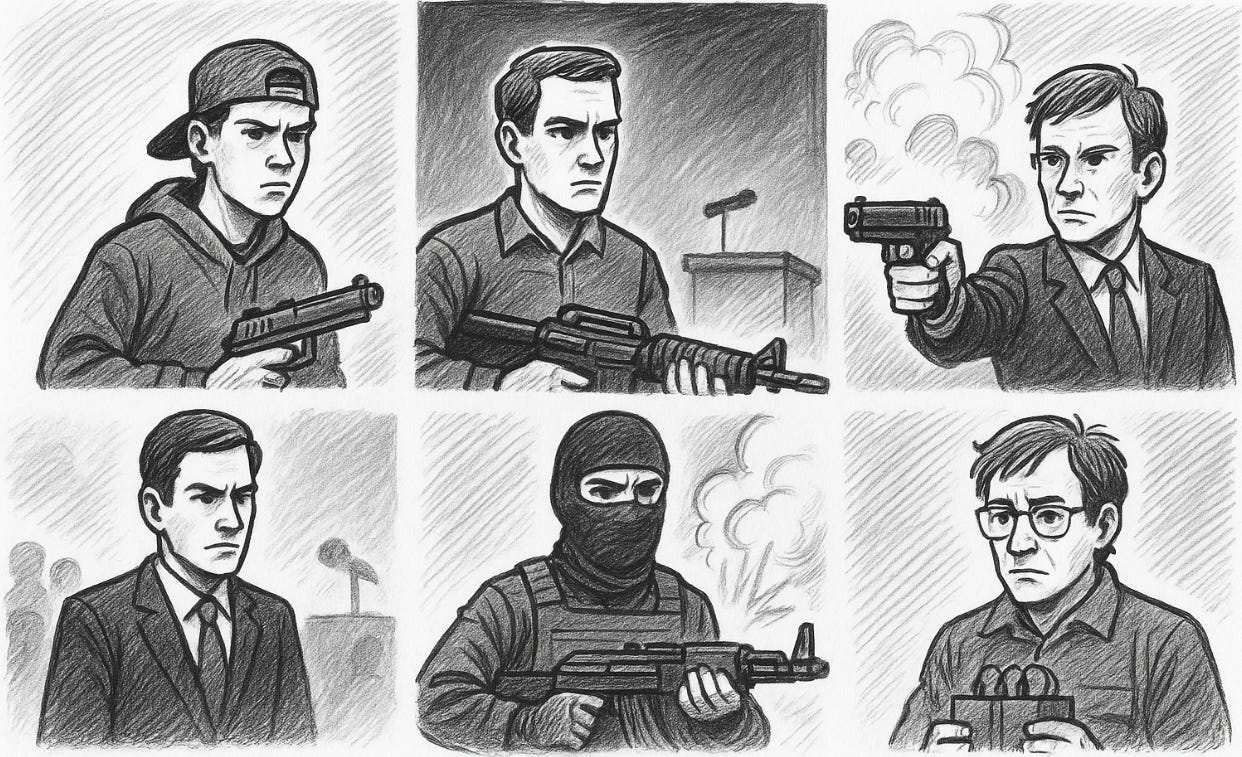
But if we don’t separate these motives and understand why they are happening, we can’t prevent these attacks. School shooters need early intervention and community-level prevention because they are a suicidal child or teen in crisis. Mass shooters often slip through the cracks of mental health systems and since they are older than high school kids who are living at home, they don’t have anyone watching over them to spot warning signs. Political assassins usually plot in secret, don’t want to be caught, and have a single political figure they want to target. Meanwhile, ideological terrorists will pick any target of opportunity that will get media attention. Inversely, single-issue terrorists who are advancing their moral beliefs, might not want to hurt any person.
When these five types of public violence are completely different, there’s not a single or simple solution. If we try to simplify public violence into one category, we will fail at stopping it.
David Riedman is the creator of the K-12 School Shooting Database, Chief Data Officer at a global risk management firm, and a tenure-track professor. Listen to my weekly podcast—Back to School Shootings—or my recent interviews on Freakonomics Radio, New England Journal of Medicine, and my article on CNN about AI and school security.
Very helpful analysis, your clarity really useful for trying to comprehend these senseless violent times.
Thank you.