
'Pathway to violence' model doesn't apply to new online radicalization trends
At every school safety conference or training, you'll hear presentations about the 'pathway to violence' adapted from terrorism studies in the 1990s. These steps don't apply to current trends.

There has been a huge shift in the patterns of online radicalization over the last 3 years. The post-COVID and post-woke stance of social media platforms is they don’t actively regulate user content, and they don’t ban accounts for violence or racism. If a teen in 2020 shared a bunch of ISIS beheading videos, their account would be locked and deleted in minutes. They could create a new account, but it wouldn’t have any followers. Back when social media platforms regulated violent content, this prevented accounts for gaining momentum and stopped communities like TCC from forming.
Everything changed after Elon bought twitter at the end of 2022, Meta ended content moderation and factchecking in 2024, Google/YouTube stopped human review of flagged content in early 2025, and Congress banned TikTok but the president unilaterally decided the company can operate without regulation anyway. This created easily accessible social media platforms where kids could openly share violent videos, grow followers, and build extremist communities that other kids can find with a simple search.
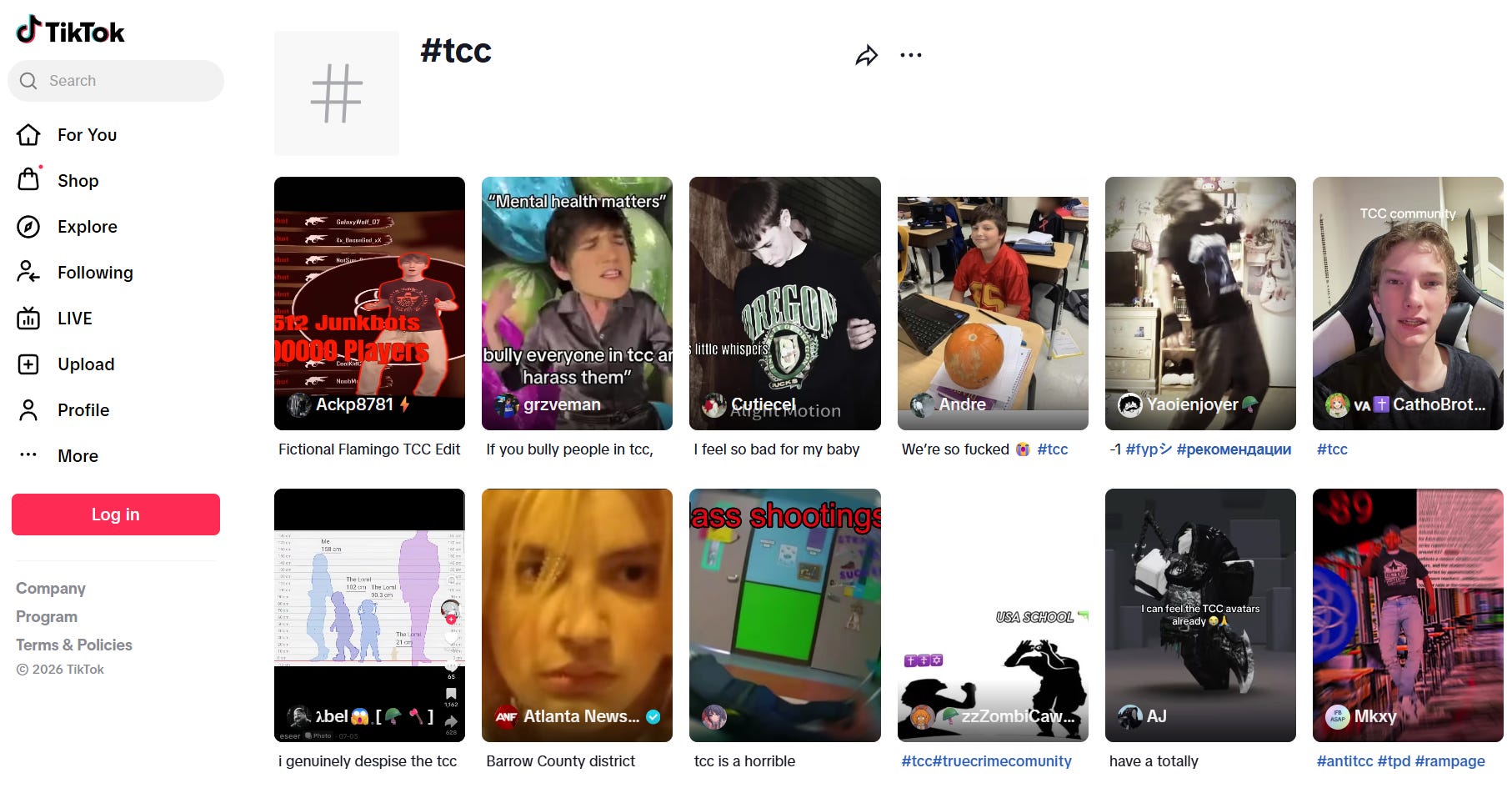
The real world impact is the last ~18 school shooters in the US, Canada, Brazil, Germany, Philippines, Turkey, and Indonesia are idolizing the same people and trying to gain status with the same online communities.
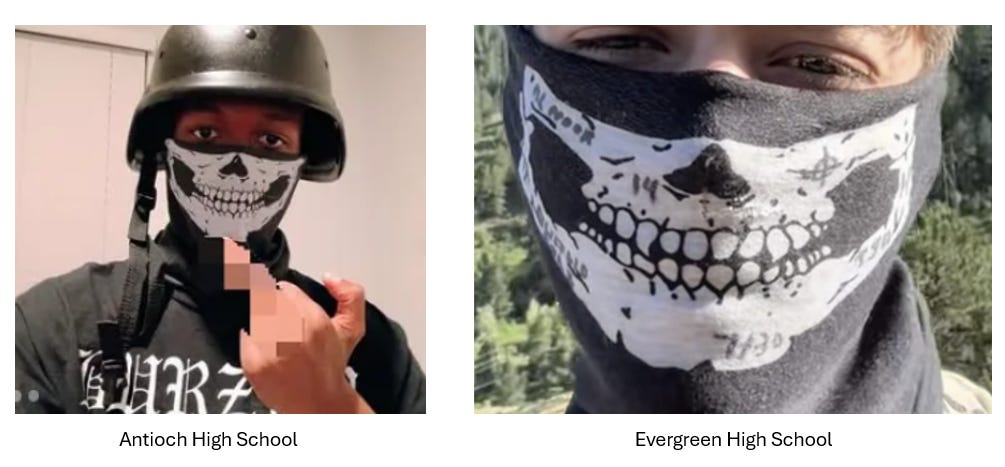
In the endless scroll on TikTok right now there are school shooting avatars and games, a kid wear the same skull mask that two school shooters wore last year, meme edits, news clips about mass shooters, and this is just the few examples.
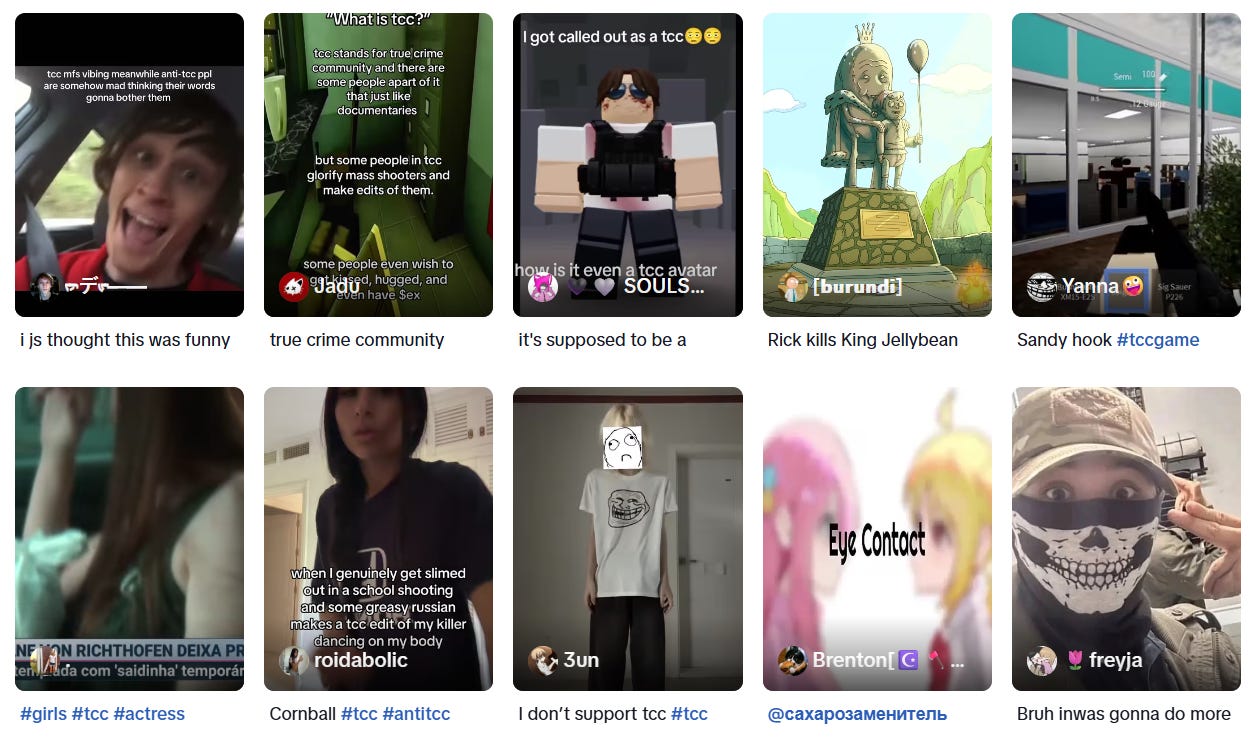
A perfect example of the shift in the motivation of school shooters is this recorded jail phone call between convicted Apalachee High school shooter Colt Gray and his mother. Colt is obsessed with his status in the True Crime Community (TCC) so he spends his time on the phone with his mom having her read posts about him and share photos.
During this call, Colt’s mom describes a TCC quiz to guess the mass shooter with the most annoying fans. (note: Colt’s dad was sentenced to 15 years in prison today for buying his 14-year-old son the AR-15 rifle he used as a Christmas present 9 months before the attack)
As she reads the names to her son, she says "Brenton. Brenton Tarrant?" Colt explains he is the New Zealand Christchurch mosque shooter who killed 51 people. Colt then describes the Russian mass shooters as "so cringe".
She finishes out the list of "Eric, Dylan, Adam, Andrew, Randy, Elliot, Artyom, Nikita, Brenton, Cho, and....Colt".
Colt proudly says to his mom: "I'm on there? I'm in the big leagues, bro".
FBI’s (outdated) Pathway to Violence
Government agencies love simple, linear charts to explain complex behavior. Here is the graphic from the FBI Pathway to Intended Violence Model - Quick Reference Guide. This graphic cites a 2003 book that’s no longer available. This pathway model sits at the center of the FBI’s 129-page PDF guide for Making Prevention a Reality: Identifying, Assessing, and Managing the Threat of Targeted Attacks.
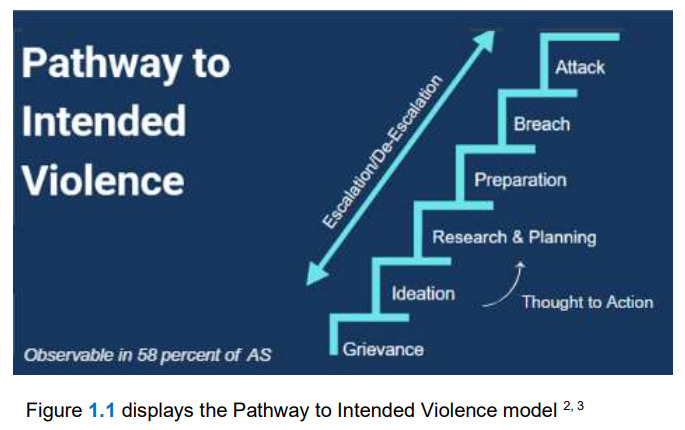
On the surface, the FBI’s pathway looks pretty simple:
Get upset about something at school (grievance)
Start thinking about violence as the response (ideation)
Look at the details of prior attacks (research and planning)
Find weapons (preparation)
Take weapons to school (breach)
Pull the trigger (attack)
While it’s not cited in the FBI’s materials, the pathway model likely came from Dr. Fathali Massoud-Moghaddam’s research on terrorism in the 1990s and early 2000s. I know this because he was one of my professors before students just read the ChatGPT summaries. Dr. Moghaddam’s ‘staircase to terrorism’ (developed a decade before the FBI’s model) is the same premise and 6-stage process with more nuanced explanations of the “floors” and transitioning between them.
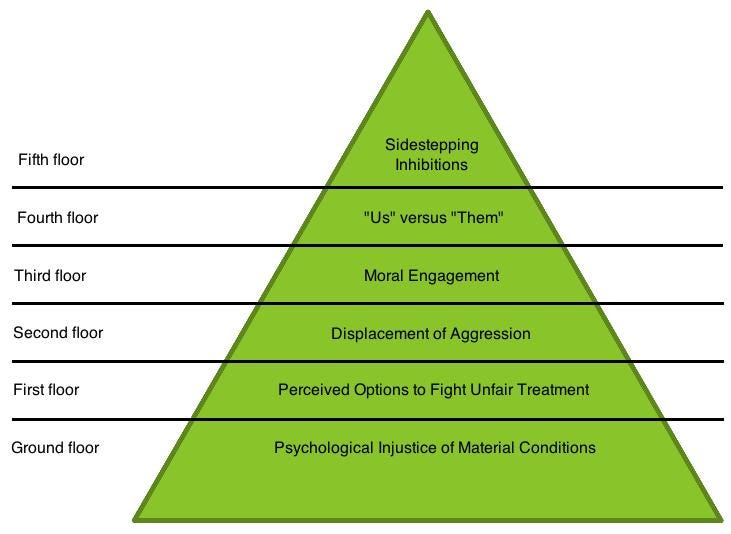
Once the FBI puts the badge of approval on a concept, every retired police chief and ‘school safety expert’ who wants to make $25k off a training session adapts the model for their own use.
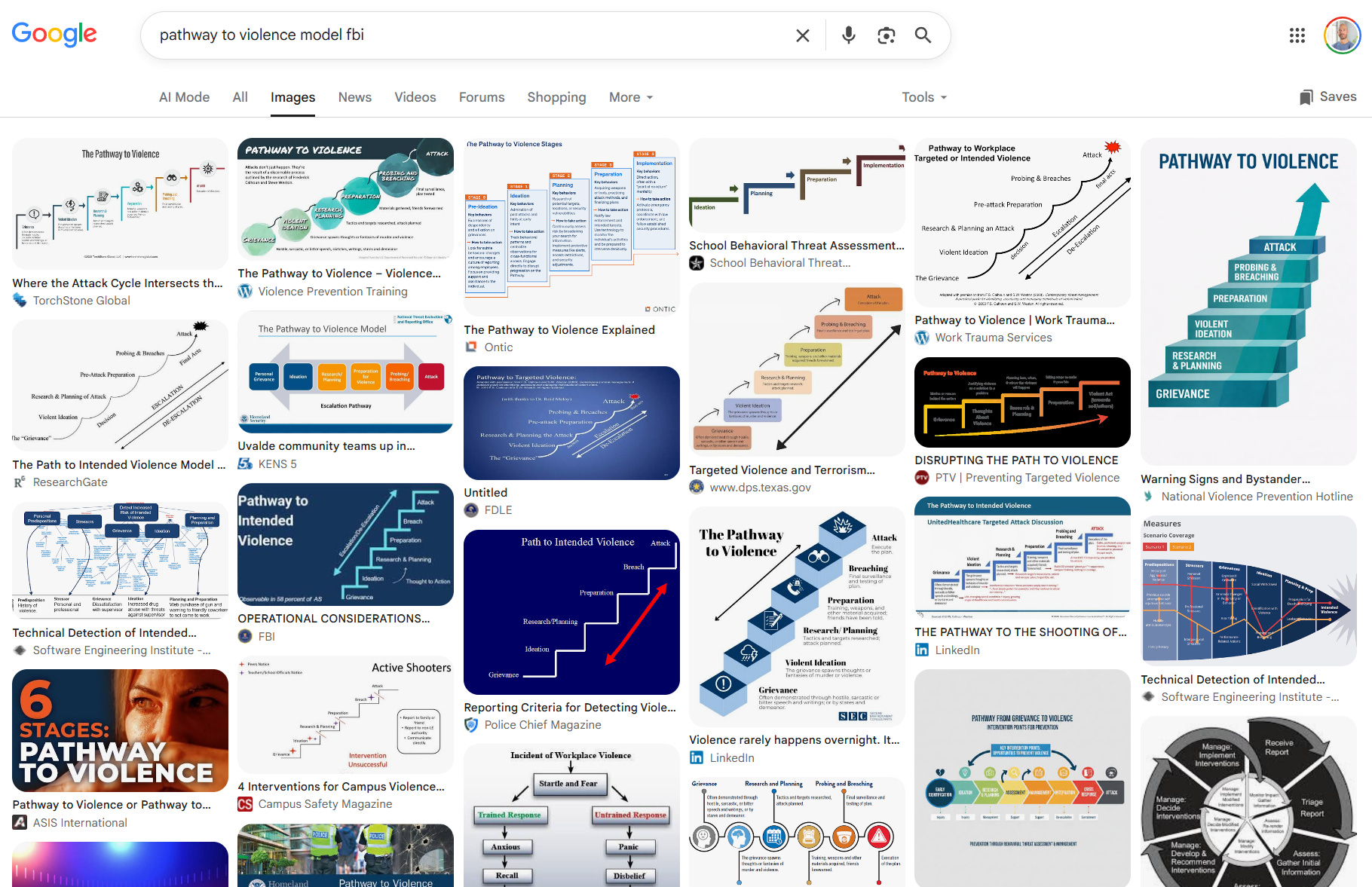
The result is a bunch of ‘experts’ have adapted an outdated model from the FBI. And the FBI model was already adapted from completely different threat profile created by a terrorism researcher. If you’ve read the articles I’ve written about terrorism, the motivation of terrorists are completely different from school shooters so this was a flawed approach from the start.
FBI pathway doesn’t apply to TCC cases
What’s trending on TikTok the day after Colt Gray was sentenced to life in prison without parole for the Apalachee High school shooting? There are a bunch of new TCC videos and fanart celebrating him. He is probably grinning ear-to-ear in prison because this was his goal.
Colt committed the attack because he wanted higher status within his online in-group. Unlike terrorists in the 1990s, he didn’t have a pathway to violence following a linear staircase from grievance to ideation to research to prep to breach to attack. He wanted more likes and followers to be in the top tier of mass shooter fandom. I think that preventing memes and TikTok clips from turning into real-world violence requires seeing radicalized teens through an influencer instead of a terrorist profile.
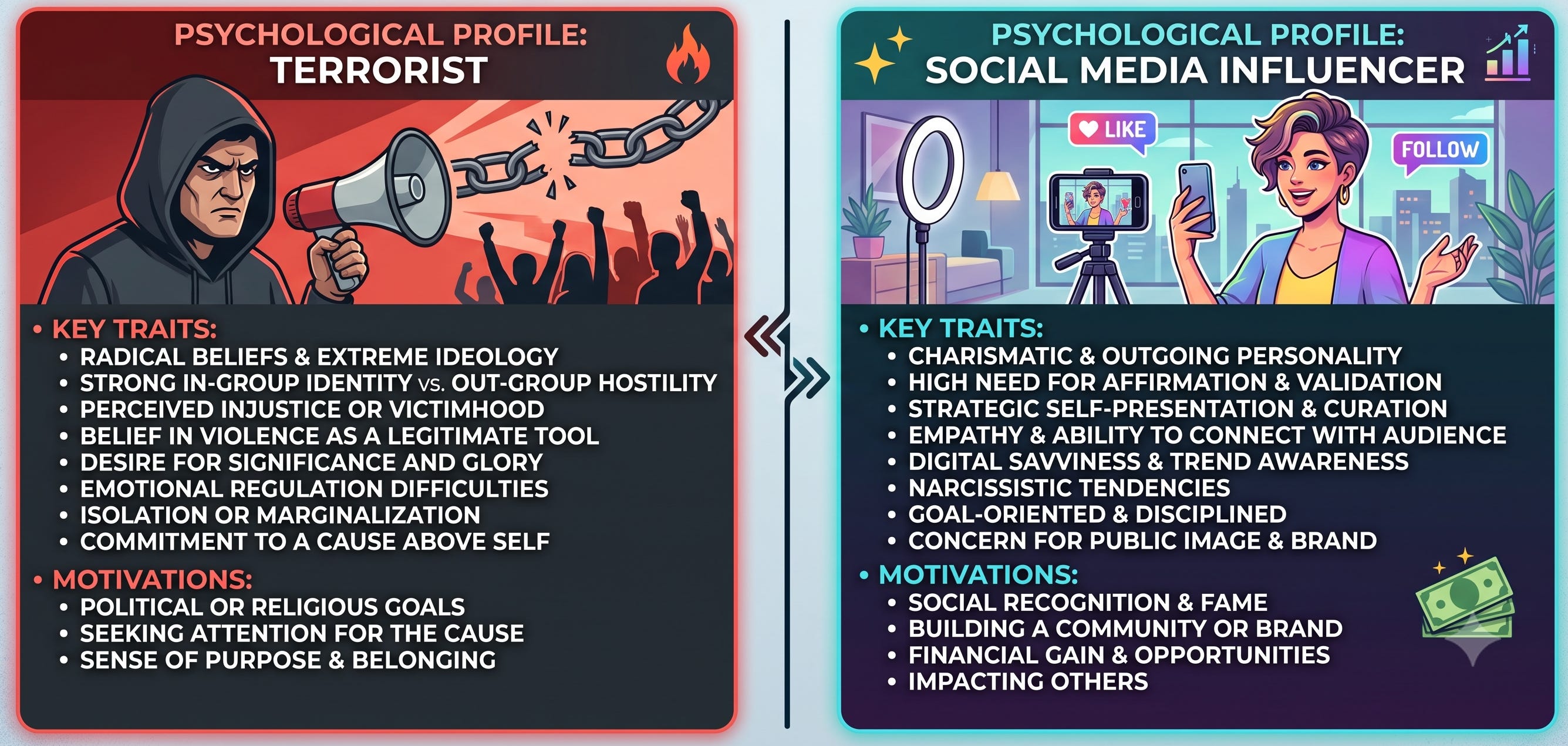
This isn’t just Colt Gray. The last ~18 school shootings around the world follow this new influencer paradigm that’s motivating teens to commit mass violence. Contrary to the FBI model, they didn’t start with a grievance. Some of them were depressed, suicidal, or angry so they wanted to find a community that understood them. Others found it by accident like Dana’s 14-year-old son who wanted to mentally prepare himself for being the victim of a school shooting and then went down the rabbit hole of gore content. Others think society and life have no purpose so everything becomes a meme and a joke for their TCC in-group.
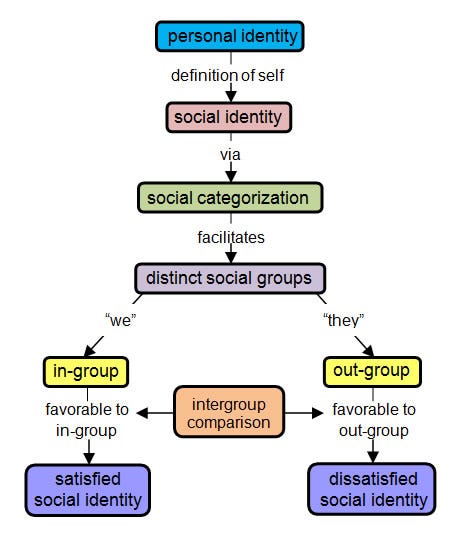
Once these kids decided that TCC is their in-group, all their actions are about gaining status within that group and challenging the outgroup (normies). Colt and the other recent school shooters wanted to be the “you” in an “all I ever wanted” 12-second TikTok. It’s that sad and that simple.
It’s critical to realize when the paradigm changes. If your business or school district is assessing threats with a 1990s terrorism model that the FBI adapted to domestic mass shootings in the 2000s, your organization is two decades behind the current trends.
David Riedman, PhD is the creator of the K-12 School Shooting Database and a tenure-track professor. Listen to my podcast—Riedman Report: Risk, AI, Education & Security—or my interviews on Freakonomics Radio and the New England Journal of Medicine.