

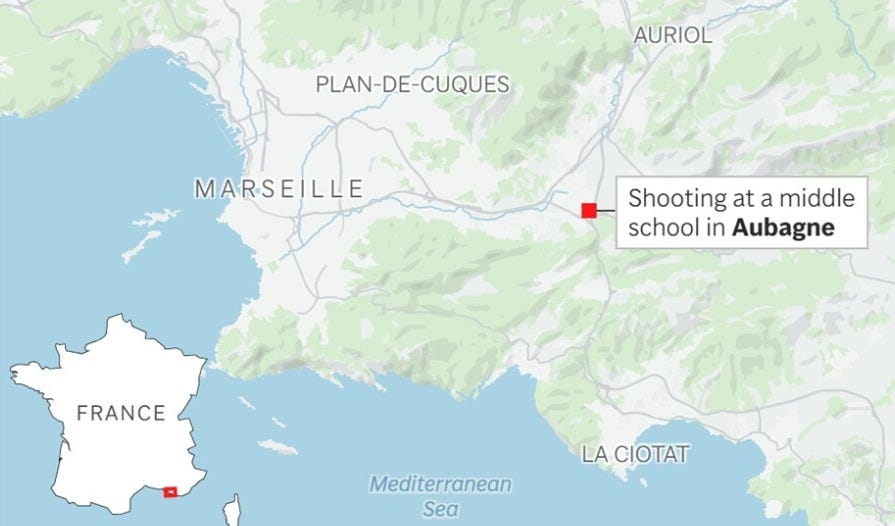
French students at Joseph Lakanal Middle thought a loud bang was construction noise. Then they realized it was a shotgun. “We were panicking. We ran,” a student said. “There were two ways out: one passage to the sports hall and one passage to go outside. Survival instinct took over, and I ran towards the outside.”
According to French police, the teen had “probable adherence to the ‘True Crime Community’ (TCC) movement” and indicated that the criminal act committed at his school was “rooted in this ideology”. I’ve recorded more than 40 school shootings and plots connected to TCC in a dozen countries over the last 2 years.
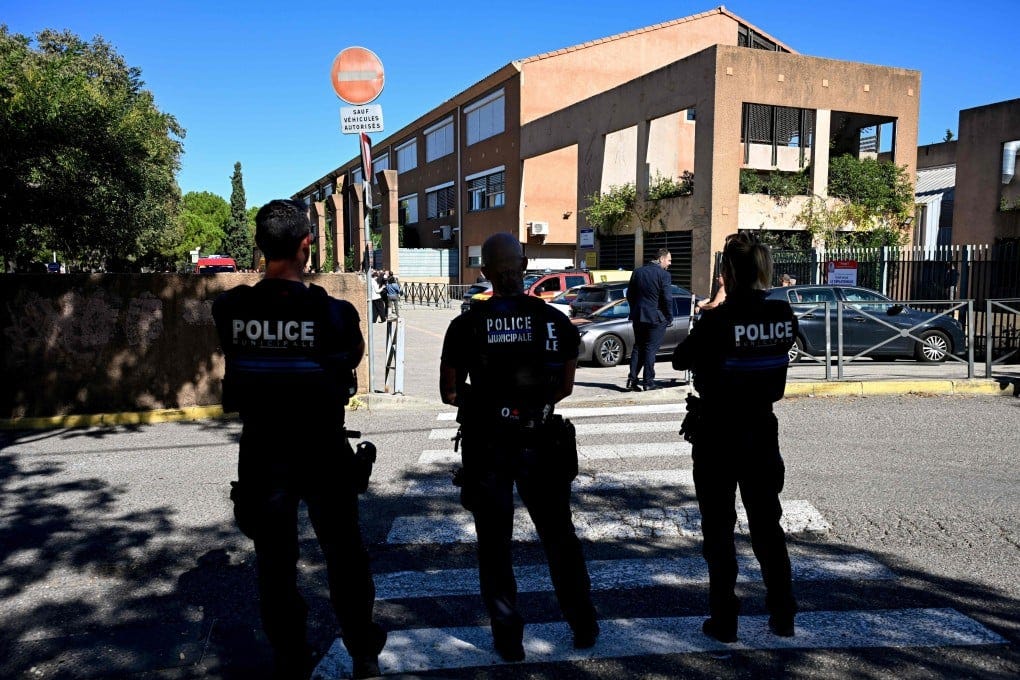
Before the attack in France started, the 14-year-old student used a guitar case to sneak a shotgun into his school (just like at the STEM School in Highland Ranch, CO in 2019). The student fired twice with a 12 gauge shotgun on the first floor of the school, injuring the principal and teacher inside a classroom full of students before he continued to the second floor. The teen fired two more shots on the second floor before being disarmed by a staff member. A third person was grazed in the shooting.
The teen was only targeting staff members during the attack and didn’t aim/fire at any students inside the classrooms. One student told local media that she bumped into the shooter in the hallway when students started fleeing after hearing gunshots and he told her: ‘I’ve only come for the teachers, not for the pupils’.
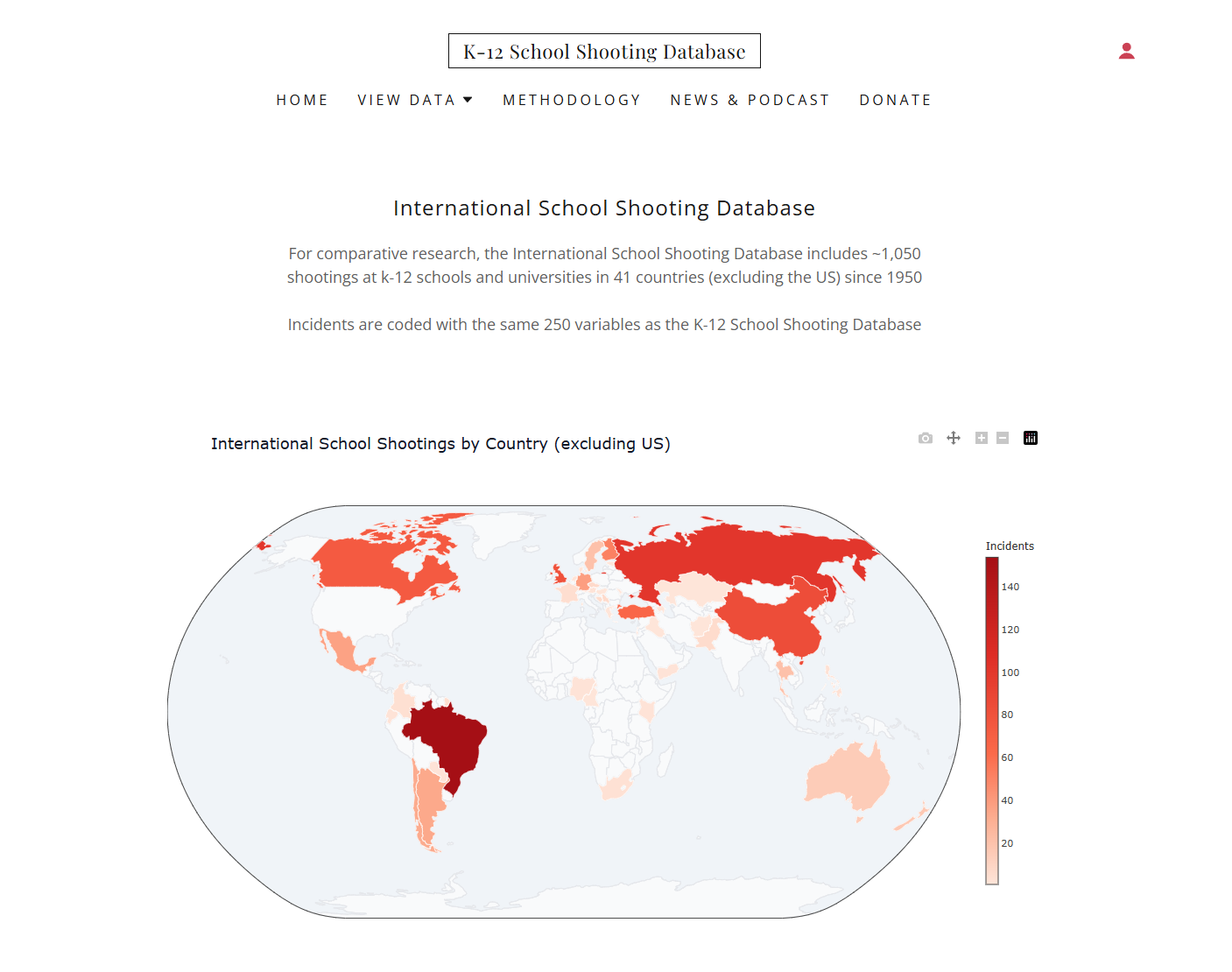
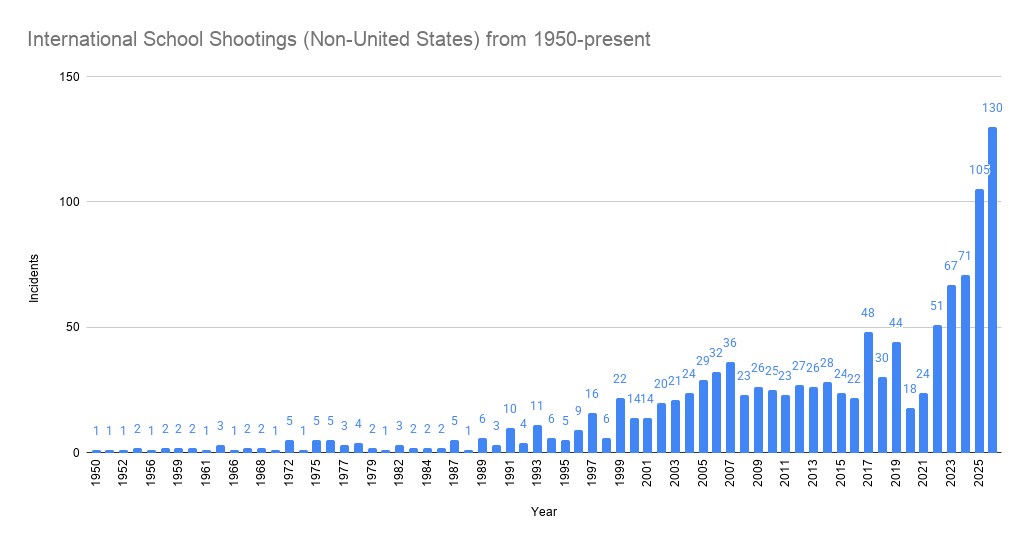
After years of requests, I finally published an international school shooting database with more than 1,100 incidents in 115 sovereign countries and territories. This new database excludes the United States because I already have a comprehensive database of US k-12 school shootings and a new higher education version will be coming out soon.
“American-style” school shootings are a serious issue all over the world and online radicalization is fueling this trend. In September, a student committed a school shooting in the Philippines for the third time this year. I’ve also written articles in 2026 about school shootings in Thailand, Turkey, Germany, Mexico, Brazil, and Canada (these links are all my articles):
5 dead, 20 injured at Thailand’s prestigious Debsirin Nonthaburi School
Two 9th grade students opened fire inside San Jose National High School in Tacloban City
Brazil school shooting is latest in dozens of international attacks
Nine killed and 13 wounded in second Turkish school shooting this week
Sixteen wounded at Turkish high school and active shooter trends in US
Canadian school shooter: Online radicalization, nihilism, gun culture, and gender identity
112 TCC-radicalized students identified by police in Jakarta, Indonesia
Angel Redoble from the Philippine Society of Cyber Security Professionals said young Filipinos were typically targeted on social media apps like Discord, or on gaming platforms like Roblox, before contact moved to encrypted messaging apps.
“These shootings are connected very closely, if not directly connected, to what’s going on in the online gaming platforms, content platforms, chat platforms and social media,” Mr Redoble told 7.30.
“Platforms where a group of individuals, we call the groomers, are manipulating, influencing and radicalising vulnerable Filipino minors into committing real life violence, such as shootings.”
Creating an international database
I never had the mental capacity to work on this because the K-12 School Shooting Database (US only) took months of research to manually code 3,500 incidents across 300 variables. Due to some initial errors, overlooked datapoints, and a wholesale change to the structure of the spreadsheet, the dataset was manually recoded three times. After that much work, I never wanted to create another school shooting database.
Beyond the mental exhaustion of reading thousands of articles about school shootings, I only know English and most coverage of international shootings is in other languages.
With the rapid advancements in AI agents, I was finally able to overcome those challenges. This new international database was created by three AI agents who can read websites in any language and then cross-check each others work following the methodology and codebook from the K12SSDB.
It took about 3 weeks to figure out how to get agents to find cases and enter the data correctly (running on burner gmail accounts so they can’t use my credit card or delete my important data). Once I had that sorted out, it took the agents less than 24 hours to populate and validate the spreadsheet.
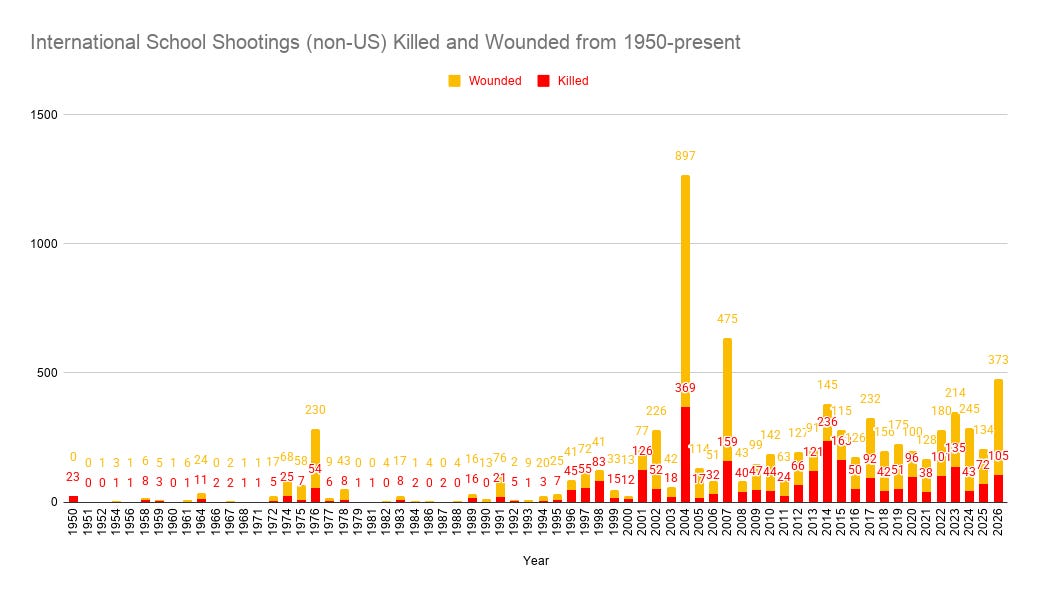
Top 10 countries for school shootings:
Brazil: 157
China: 98
Russia: 85
United Kingdom: 83
Canada: 75
Turkey: 73
Finland: 41
South Africa: 39
Germany: 37
Mexico: 37
While there may be errors in the AI collected data, I believe this is a useful tool that can be refined over time. If you would like an excel version of the International School Shooting Database for academic research or media reference, please email k12ssdb@gmail.com with your full name, institution/organization, contact information, how you plan to use the data, and statement affirming that your use of the data will be cited.
Unlike the human-created and peer-reviewed US K-12 School Shooting Database, this dataset was compiled by multiple AI agents cross-checking and validating the inputs. If you see errors or missing incidents, just send me an email and I’ll fix them.
David Riedman, PhD is the creator of the K-12 School Shooting Database and a tenure-track professor. Listen to my podcast—Riedman Report: Risk, AI, Education & Security—or my interviews on Freakonomics Radio and the New England Journal of Medicine.