
The Matrix Problem for security screening checkpoints
Standing at a metal detector all day is boring. After security staff screen thousands of people who don't have weapons, they can become complacent and surprised when they encounter one.

In 2023, I wrote an article called “The Matrix Problem” after a student shot two school staff members who were searching him for a gun at Denver East High School. The staff members didn’t expect to find a gun and weren’t trained in how to react when a student actually had one. Just like in the lobby scene of The Matrix, most staff working at a metal detector or security checkpoint don’t think someone will walk in with a weapon.
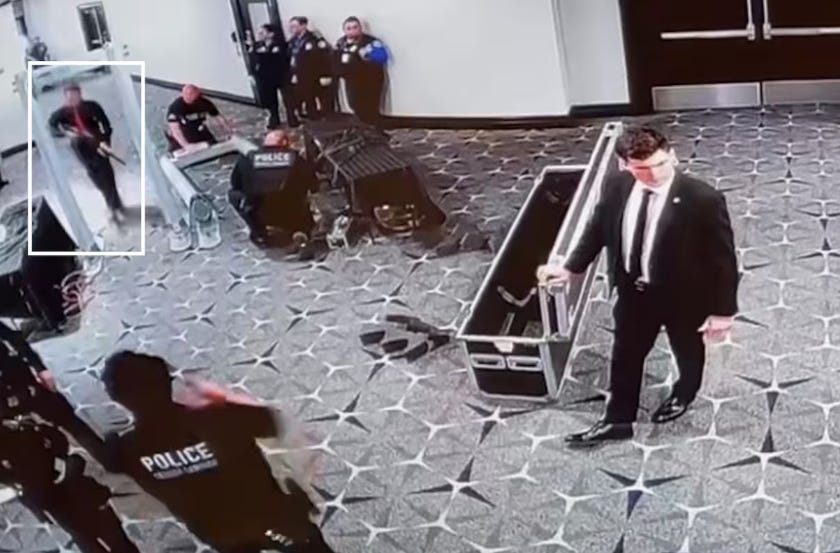
When they do encounter an armed person, they are neither prepared, trained, nor equipped to deal with the situation. As the gunman approached the checkpoint at the Washington Hilton last weekend, most of the officers were doing other tasks or not paying attention.
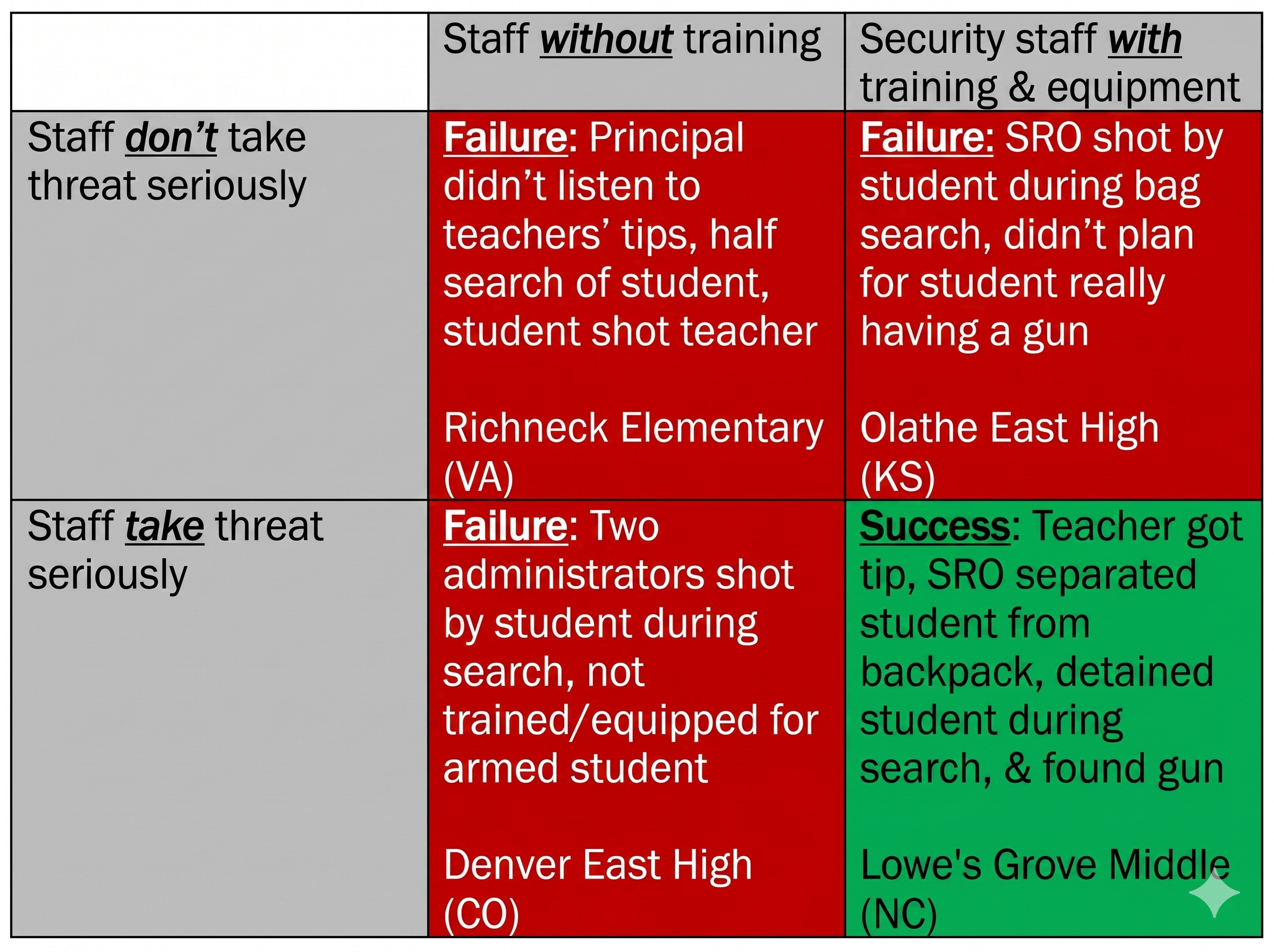
Security failures like this happen at the intersection of training and staff assertiveness. Staff at checkpoints can either:
Have correct training/equipment or lack correct training/equipment
Take the possibility of a threat seriously or assume nothing bad will happen during their shift
There are four possible outcomes with those two variables and three of the combinations result in failure. Security screening is only successful if staff are trained/equipped and take their job seriously.
Amid the chaos, there was almost an officer-caused mass shooting at the Washington Hilton. New video shows the four shots that an officer fired at the White House Correspondents Dinner suspect while he ran past the security screening checkpoint. Ironically, the clearest path for the suspect was directly through the metal detector.
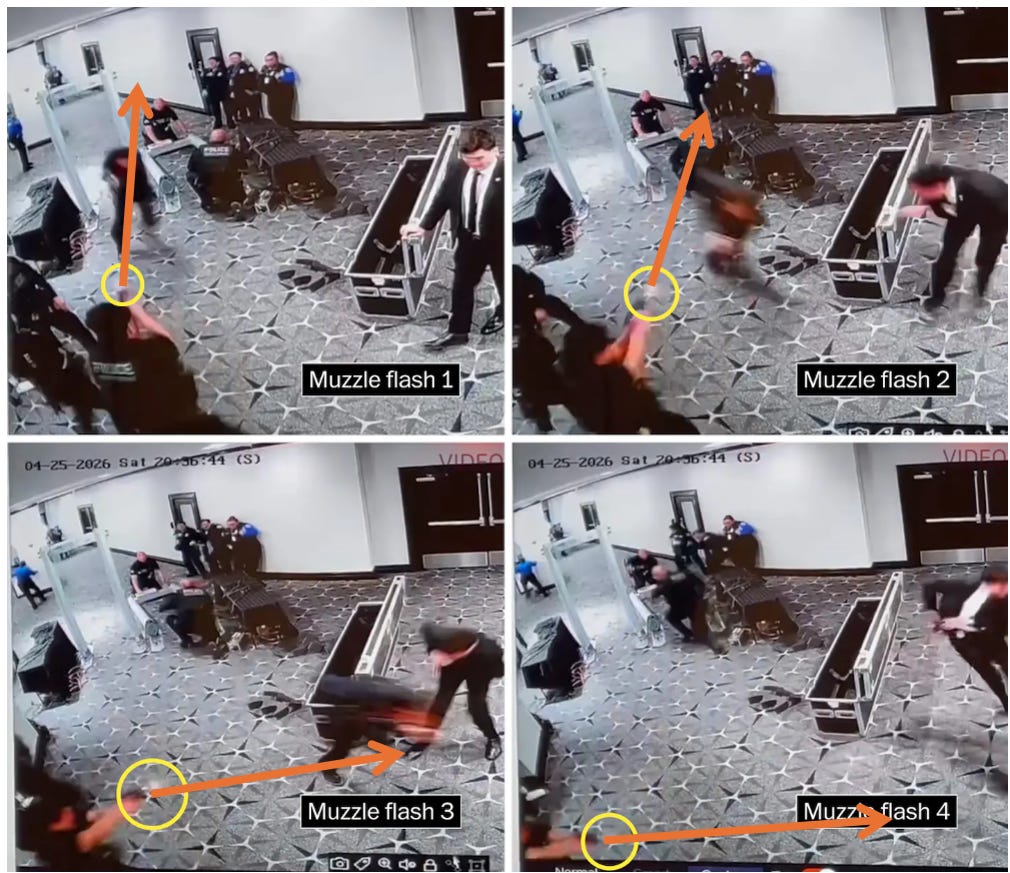
Basic training teaches officers to verify a clear and safe backstop before pulling the trigger. At a crowded security checkpoint inside a hotel lobby, the backstop was not safe and not clear with at least 6 other officers directly in the line of fire.
This agency also has a training issue if the reaction to a person running towards a group of officers is to draw a gun instead of just tackling a person who is 2 feet away. If this officer takes one step forward and lowers his shoulder, the incident is ended right there and the dinner show goes on without interruption.
Fence Jumping is Trending
Who would have thought that someone could just run right past the security screening checkpoint to get inside the secure VIP area of the Washington Hilton? A situation that is so obvious and simple can be completely overlooked during training and planning for complex attack scenarios.
Security checkpoints largely depend on the social contract of people being willing to stop and be checked. At the WHCD, the assailant broke the social contract by running right past security. This has been a growing trend for event security with large groups of people running past the ticket checks and disappearing into the crowd.
If you are involved in event security, fence jumping has always been a problem. Now, fence jumping POVs are a growing trend. The fence jumper gets to see a festival with a $200-800 ticket price for free and gets to monetize a couple million views on social media.
Traditional event security relies on most people following the social contract (e.g., buy a ticket, wait in line, walk through a metal detector). When people don’t play by these rules, the ‘gates & guards’ strategy breaks down very quickly.
Many schools have added fences around the entire perimeter of the campus to increase security. I would bet that 90% of middle and high school students can easily climb over those fences if they didn’t want to enter/exit at the main gate. If a student is plotting a shooting on campus, or if someone wants to get into a football game without a ticket, a 6- or 8-foot metal fence isn’t stopping them.
Helping people with disabilities during shootings
Training must be for real world conditions because during high intensity situations like a shooting inside a crowded building, people will do exactly what they practiced. This includes training for staff, security, and police.
For example, the president has balance and mobility issues which means the Secret Service needs to train for extracting someone slowly with support on every side. If they run training sessions with an agent who has full mobility pretending to be the president, the trained movements are too fast to apply in the real world.
This is why schools and workplaces need to be very careful with if and how they teach lockdown or ‘Run, Hide, Fight’ training. If the procedures assume that every student or employee has full mobility, a person in a wheelchair might not be able to follow the procedures.
When an elderly person on blood thinners takes a hard fall, the consequences can be fatal. The same goes for a student in a wheelchair with spina bifida. If staff are told to grab children from their wheelchairs to run or hide, dragging or carrying a kid with a serious disability can cause injuries that are just as serious as being shot.
Training for inaccurate circumstances or using bad tactics can be worse than not training at all.
Breaking out of The Matrix
The Washington Hilton incident is a textbook example of “The Matrix Problem”.
The fundamental flaw in modern security lies in over-relying on a checkpoint myth that assumes voluntary compliance by guests and constant vigilance by staff. Traditional security infrastructure like metal detectors, fences, and checkpoints creates an illusion of safety that crumbles the moment an attacker chooses to opt out of the social contract. When that social contract is broken, static barriers and physical fences become ineffective liabilities that fail to stop determined attackers.
Effective security requires a holistic approach that stress-tests procedures against the reality of real people and diverse populations (including those with mobility limitations). Security only works if the staff are mentally prepared to encounter a threat. Lockdown and emergency procedures only work if students and employees can actually follow them. Security plans and training must include the most simple and obvious threat situations because too much focus on complexity can stop a team from executing their most basic functions.
David Riedman, PhD is the creator of the K-12 School Shooting Database, Chief Data Officer at a global risk management firm, and a tenure-track professor. Listen to my podcast—Riedman Report: Risk, AI, Education & Security—or my recent interviews on Freakonomics Radio and the New England Journal of Medicine.