
Are school shooter drones breaking federal law?
The Federal Communications Commission (FCC) banned the import and operation of Chinese drone and Chinese-built critical flight components. What's inside the drones schools are buying?

Three days before Christmas, the FCC made the surprise and unprecedented announcement that Chinese drones and drone components made in China had been added to the List of Equipment and Services Covered By Section 2 of The Secure Networks Act. This action effectively banned the import, marketing, and sale of all Chinese drones and components in the United States.
While the drone industry was shocked by this announcement, it fits with the current President’s June 6, 2025 Executive Orders: Restoring American Airspace Sovereignty and Unleashing American Drone Dominance. To secure the nation against malware or sabotage, drones can’t be sold, marketed, or operate domestically if “UAS Critical Components” (below) are manufactured in or imported from China including the:
Data transmission devices
Communications systems
Flight controllers
Ground control stations and UAS controllers
Navigation systems
Sensors and cameras
Batteries and battery management systems
Motors
This announcement was a huge blow to the domestic drone industry because the United States doesn’t manufacture small motors, batteries, and electronic components with the scale and market efficiency of China. Building a drone that complies with federal law is now very expensive because each part needs to be either sourced or custom fabricated domestically. Here is a recent interview with the CEO of drone manufacturer Skydio ($4.4B company) explaining how they are creating a domestic supply chain to comply with the new regulations.
And that brings me to the drones that are being sold to schools to “suppress active shooters”. The basic concept is this company mounts drones in boxes on the ceiling of a school and if there is a shooting, human pilots will remotely fly the drones at 60mph through the hallways to fire pepper balls and ram into the assailant with the same force as an MLB pitcher throwing a fastball.
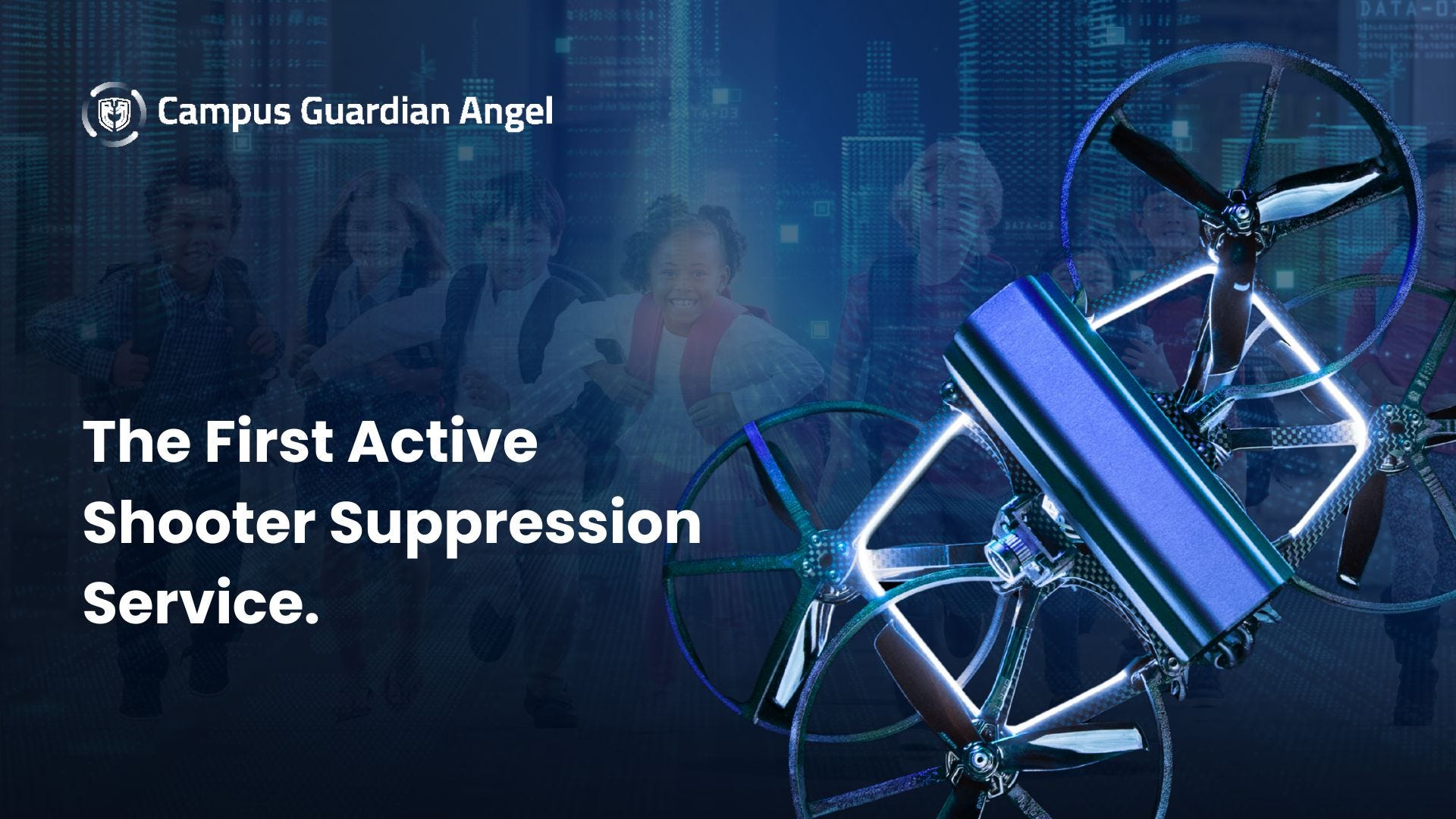
I wrote about these drones in July 2025 because the basic operation of a aircraft inside a school present a ton of risks and unanswered questions about safety. I also interviewed the directors of HBO’s film Thoughts and Prayers that featured this company during the opening scene of their movie.
What’s inside this drone?
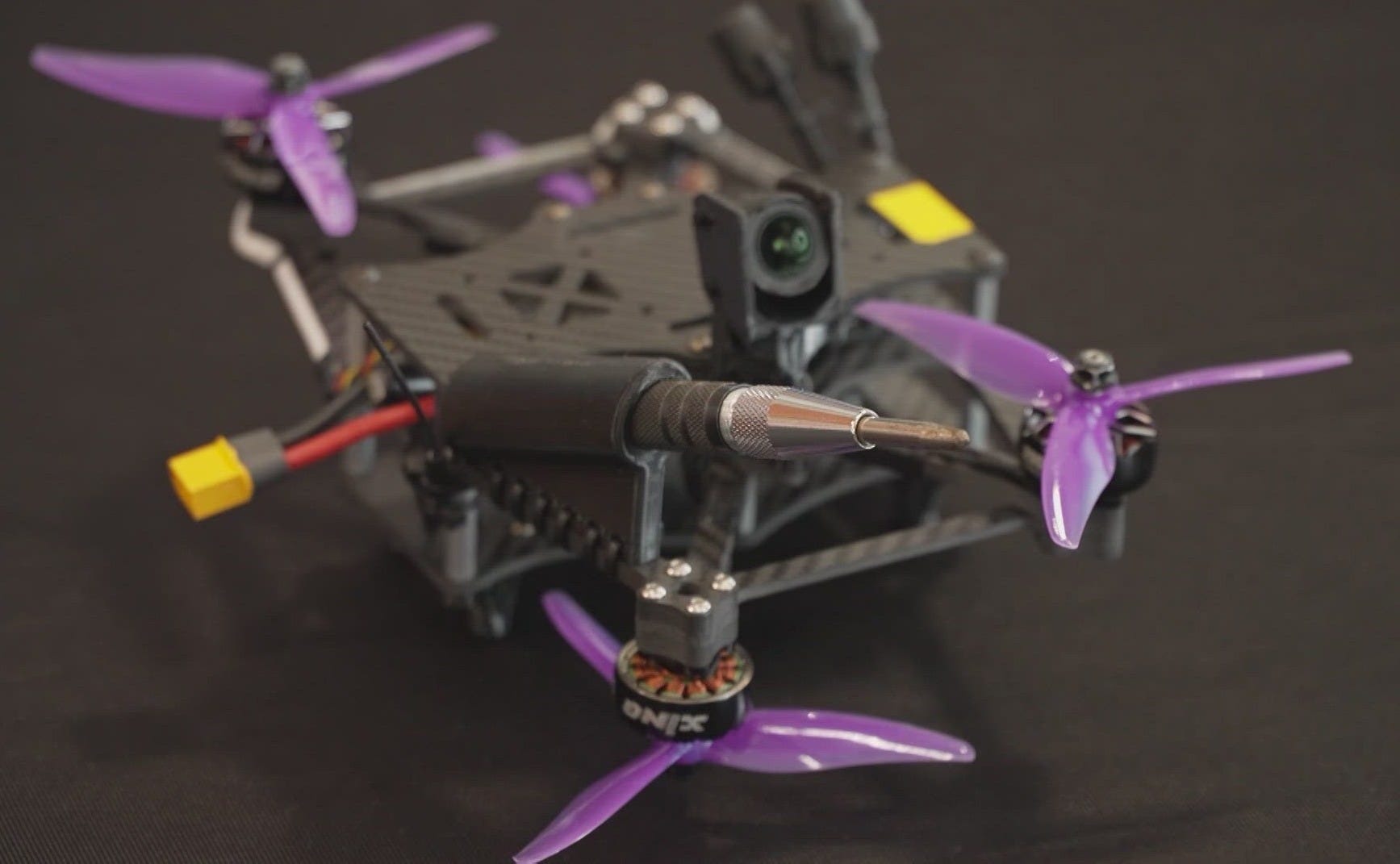
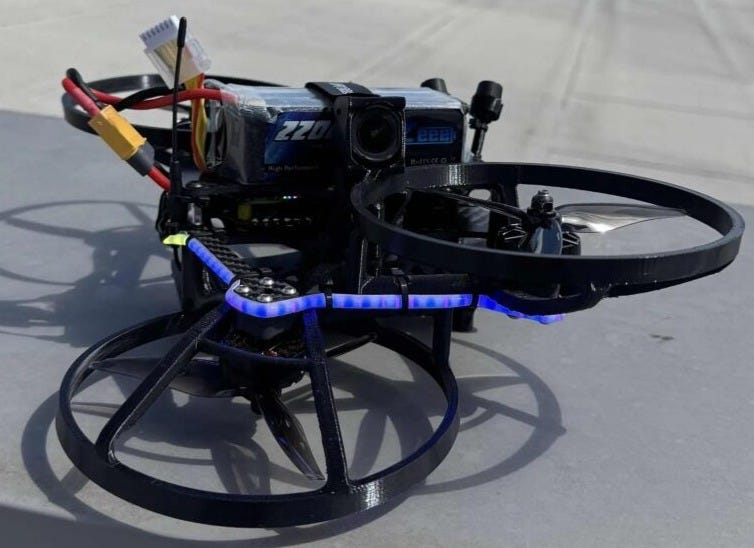
Manufacturing specs and parts information isn’t posted on the company’s website. News stories about the drone company have these closeup photos that provide enough details to see some of the ‘critical flight components’ regulated by the FCC.
On the bottom of this photo, you can see “XING’ (upside down) which is a Chinese-made drone motor.
In this photo you can see some of the text on the battery pack. This matches at Zeee 4S/6S High-C LiPo Battery Pack manufactured by Dongguan Henghui Electronic Technology Co in China.
In this photo, you can see slightly different motors from the first version. Based on the text, these are iFlight FPV motors designed in collaboration with pilot and videographer Ellis Van Jason. Like the other flight components, iFlight motors are made in Huizhou City, China.
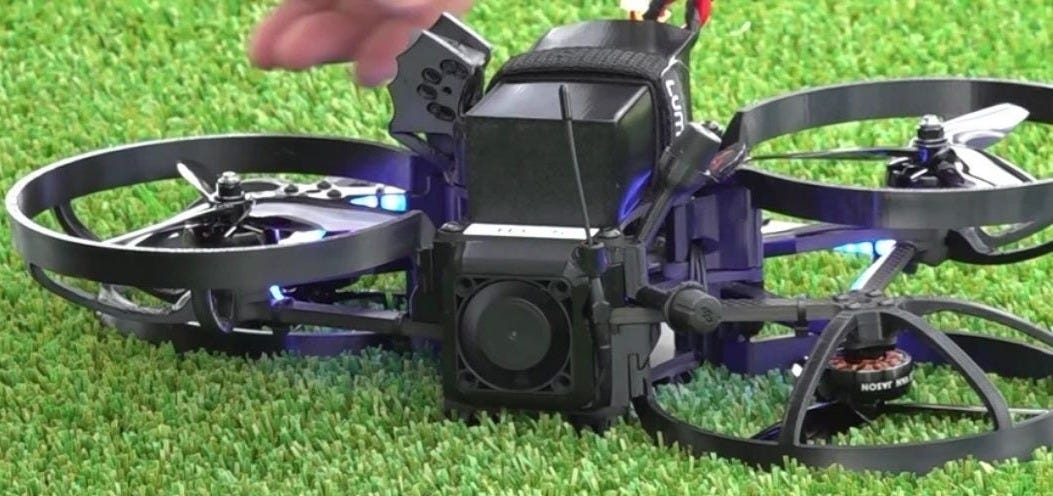
The camera on the front of the drone in this photo looks like a Chinese-made DJI O3 Air Unit Camera Module.
Without the chance to physically rip this drone apart and look at the other components, I’m fairly confident (not certain so don’t sue me) that major flight components including the motors, battery, and camera on this drone being sold to schools are made in China and this violates FCC Section 2(a) of the Secure and Trusted Communications Networks Act.
Adding Risks to Schools
I’m already concerned that flying a drone around a school creates more risk of injury to bystander students than the extremely slim chance of a drone stopping a school shooter.
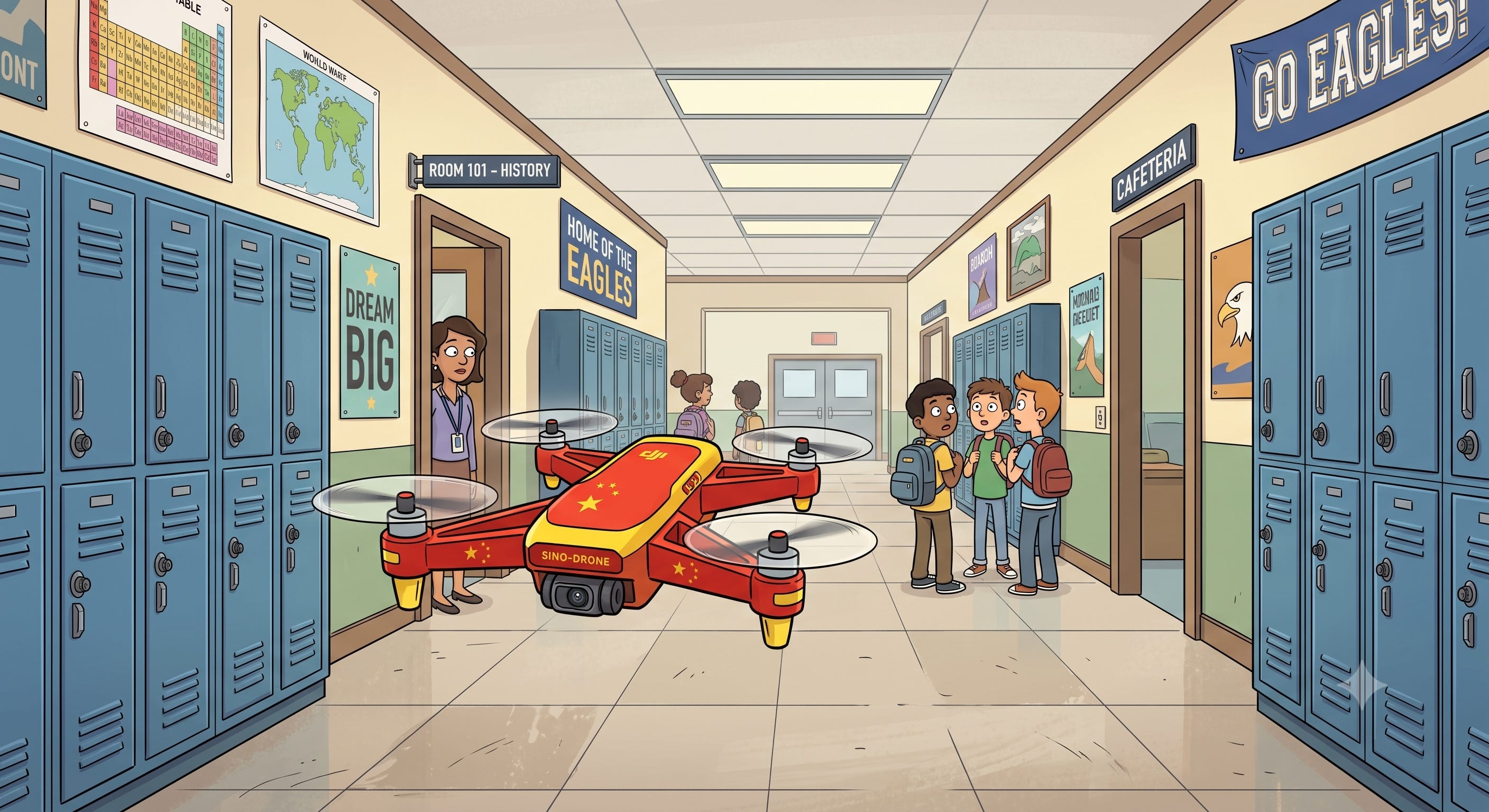
Adding to that risk, could Chinese embedded malware be used to remotely deploy, crash, or cause chaos with a pepperball-cannon equipped drone mounted inside a classroom? The drones being sold to schools are made by a tiny startup that is very unlikely to have the scale or resources to create a domestic supply chain for the critical flight components.
By using imported Chinese-made consumer components, the remote flight system can also be hacked by a third party, or even a rouge AI since Anthropic and OpenAI’s lab leaks have been in the news.
As we get ready for the 2026-27 school year, these drones are being piloted at schools in Florida, Colorado, and Texas. State lawmakers and school officials need to make sure that drones operating around children are compliant with federal law and aren’t creating new risks that can harm students.
David Riedman, PhD is the creator of the K-12 School Shooting Database and a tenure-track professor. Listen to my podcast—Riedman Report: Risk, AI, Education & Security—or my interviews on Freakonomics Radio and the New England Journal of Medicine.